
Category: Sukkot
-
Apple Strudel

The earliest strudel recipe was recorded in 1696 in Vienna. And there is definitely somewhere in my mind that every time I eat strudel I want to be sitting in a café in Vienna with Sigmund Freud at the next table. But making strudel is a whole different story. The pulling of the strudel dough…
-
Kreplach
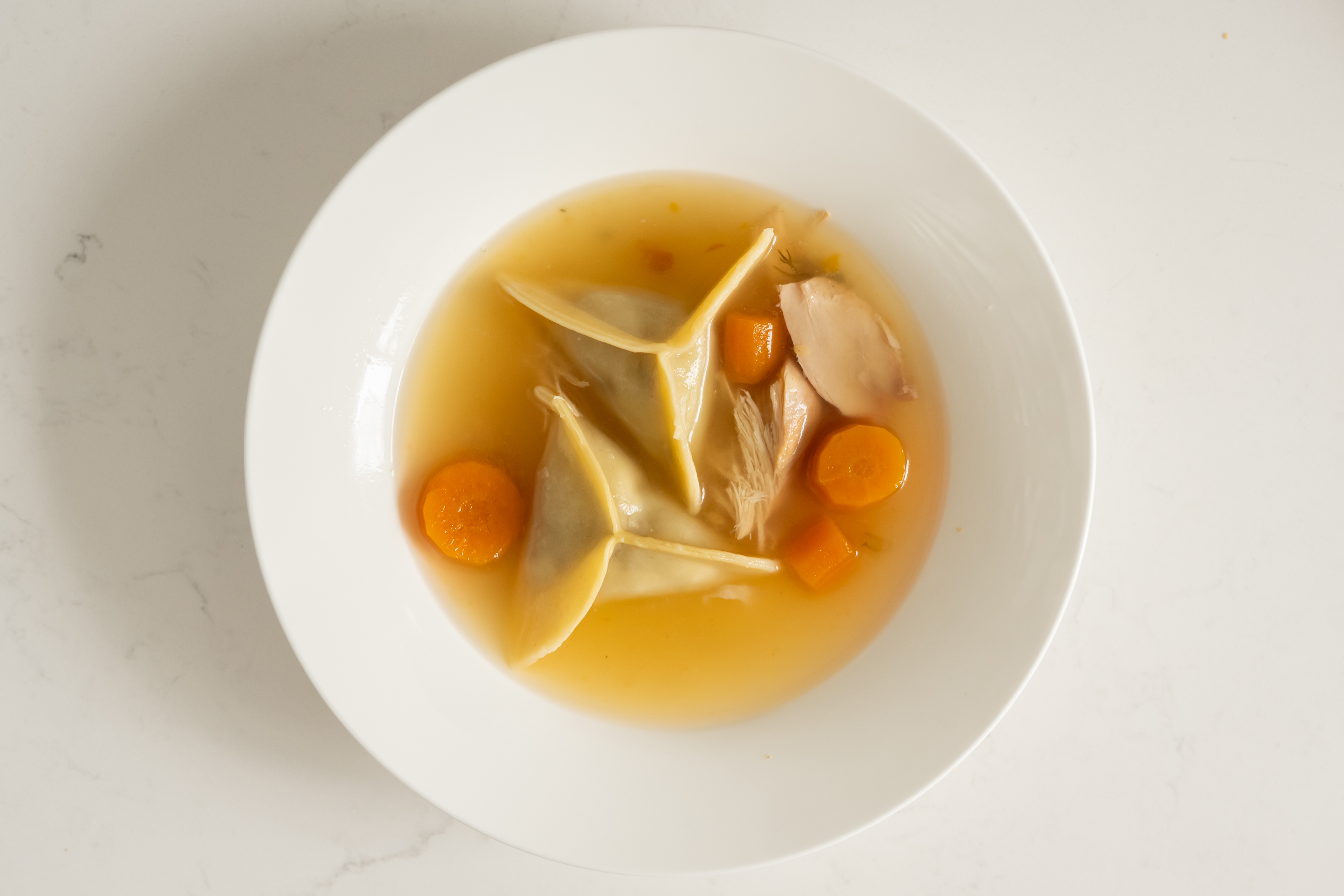
Around the 16th century, Eastern Europeans started making filled pasta; probably the influence of both the Tartar invasion from Asia in the East and Italy in the South. Regardless, this was innovative. As hard as it is for us to imagine, it hadn’t occurred to the people of Northern Europe to boil their pasta; they…
-
Empanadas

Makes 12–15 medium-sized empanadas Though many think of empanadas as South American savoury handheld pastries, they are in fact originally from Spain. The author of the Shulchan Aruch – Rabbi Joseph Caro (1488–1575) – writes about empanadas in his treatise on Jewish law. Empanadas travelled east with the Jews fleeing the Spanish Inquisition, and many say that…
-
Meatball Soup

This is comfort food as comfort food should be served: in a bowl. It was inspired when, considering the fact that I hate walking in and out of the Sukkah (the ‘shed’ in which many Jewish people eat all their meals during the festival of Sukkot), I did my best to create one-pot meals. All…
-
Potato Knish

The original knish was created as a snack food in Eastern Europe—a thin pastry that encased a filling, making it easily transportable. In the Lower East Side of New York at the turn of the 20th century, peddlers would put homemade knishes in their carts and sell them as a quick snack. In 1890, Yonah…
-
Pastilla – Moroccan Chicken Filo Pie

I had the amazing privilege of traveling to Morocco in 2023. It was truly an experience to visit what was once home to a massive Jewish community. We were welcomed with so much warmth and food! Moroccan cuisine is so vibrant and delicious. The constant combination of sweet and savoury in every dish has always…
-
Kreplach – Jewish Meat Ravioli

Around the 16th century, Eastern Europeans started making filled pasta, likely influenced by both the Tartar invasion from Asia in the East and Italy in the South. Regardless, this was innovative. It’s hard for us to imagine, but it hadn’t occurred to the people of Northern Europe to boil their pasta; they were frying it…