
Covenant & Rollercoasters:
“What matters in a covenant is not how big or small the group thereby included is, but the commitment. It is the undertaking of responsibility for others, knowing that they too undertake responsibility for us. In a covenant, what matters is not wealth or power but the transformation that takes place when I embrace a world larger than the self.” Rabbi Lord Jonathan Sacks z”tl (Morality, Chapter 23, p. 326)

This past week has been challenging – and I think it has been that way for most of us. In Jewish tradition, the four weeks between Purim and Pesach are those of preparations. Even though Pesach is four weeks away, we are in the midst of our own games of tug-of-war. Should I prepare, should I hold off? Do I go into the kosher shop and see the shelves lined with almond meal and potato starch, or do I buy another bag of flour? These thoughts seem, and in fact are, mundane. Because in truth, life goes on. And those who prepare ahead of time will do so, and those like me who wait until the last minute will do so as well. But this year it all feels different, harder.

There is a meme out there of a cat punching another cat over and over. The cat, the recipient of the blows, just takes it, endlessly. We saw that meme and related easily, none of us questioning that we are the cat that accepts the blows. We have lived for generations with the knowledge that antisemitism exists, but we didn’t often look it in the face. We have lived with an Israel that is the UN’s very own punching bag.
So why is it harder now than it has been in the past? Why does the ebb and flow of this year feel like we are pulling ourselves from one day to the next? I think that though we have always known the truth, none of us have lived it like this, in what feels like an endless wave, the punching cat never seems to stop.
I have shared my theory of the pattern of Jewish history before but need to do so once more, for my own sake. Throughout Jewish history, we have suffered countless crises, some have been existential. After each crisis, there has been a moment of quiet, a moment to regroup. After that, there has been a communal recommitment to the covenant. We have come together to attest to our commitment to our faith to our people. And then we have once more descended to a status quo level; often there will be Jewish infighting in this period, and then the pattern starts again, another crisis, another quiet, another recommitment to covenant. It’s a roller coaster. But how do we know where on the roller coaster we are? Have we reached the terrifying summit yet? Are we in the midst of the drop – of ‘falling off the cliff’ as Jonathan Haidt terms it?

What I think we can agree on, is that we are in a moment of crisis, and that old adage of ‘it’s going to get worse before it gets better’ may give comfort to some. Have you ever wondered: how do we know when it has reached its ‘worst’? We don’t. We say that in order to build our own resilience, that idea of ‘it’s okay’, ‘I can take just a bit more of this’, ‘I can climb that mountain just a bit higher’, ‘the roller coaster can keep going to its summit’, ‘I can handle it’, ‘I have – we have – handled it this far.’ And we have managed to do so because history tells us that we survive the summit, we survive the drop, we survive falling off the cliff.
And that recommitment to covenant, when it comes, it is hard work, but it does happen, and we will be part of it as long as we hold on.
And what of the cat? I don’t know how long the cat takes the beating before it strikes back, but that cat seems to know that to strike, to react, doesn’t work. To respond, on the other hand – in the right time with intelligence – is what has kept us in the game this long.
So long, in fact, that the cat who punches starts looking and feeling absurd. The cat doling out the punches has not been on our journey, does not know about our rollercoaster and how much you need to hold on tight if you want to keep on riding it. We would willingly teach the punching cat the lessons we have learned over the generations if it would just stop hitting for a moment, but that would be a different type of cat, and this would be a different kind of world.

Though things seem bleak and difficult, we are, in a few weeks’ time celebrating another Jewish existential crisis, Jews in slavery in Egypt. It ended in a recommitment to covenant, in accepting the Torah at Sinai that led to inhabiting the Land of Israel. So hold tight, we are on this journey together.
Challah History Part 3:

Did you know that the word that most South African Jews used until recently for challah was “Kitke”?
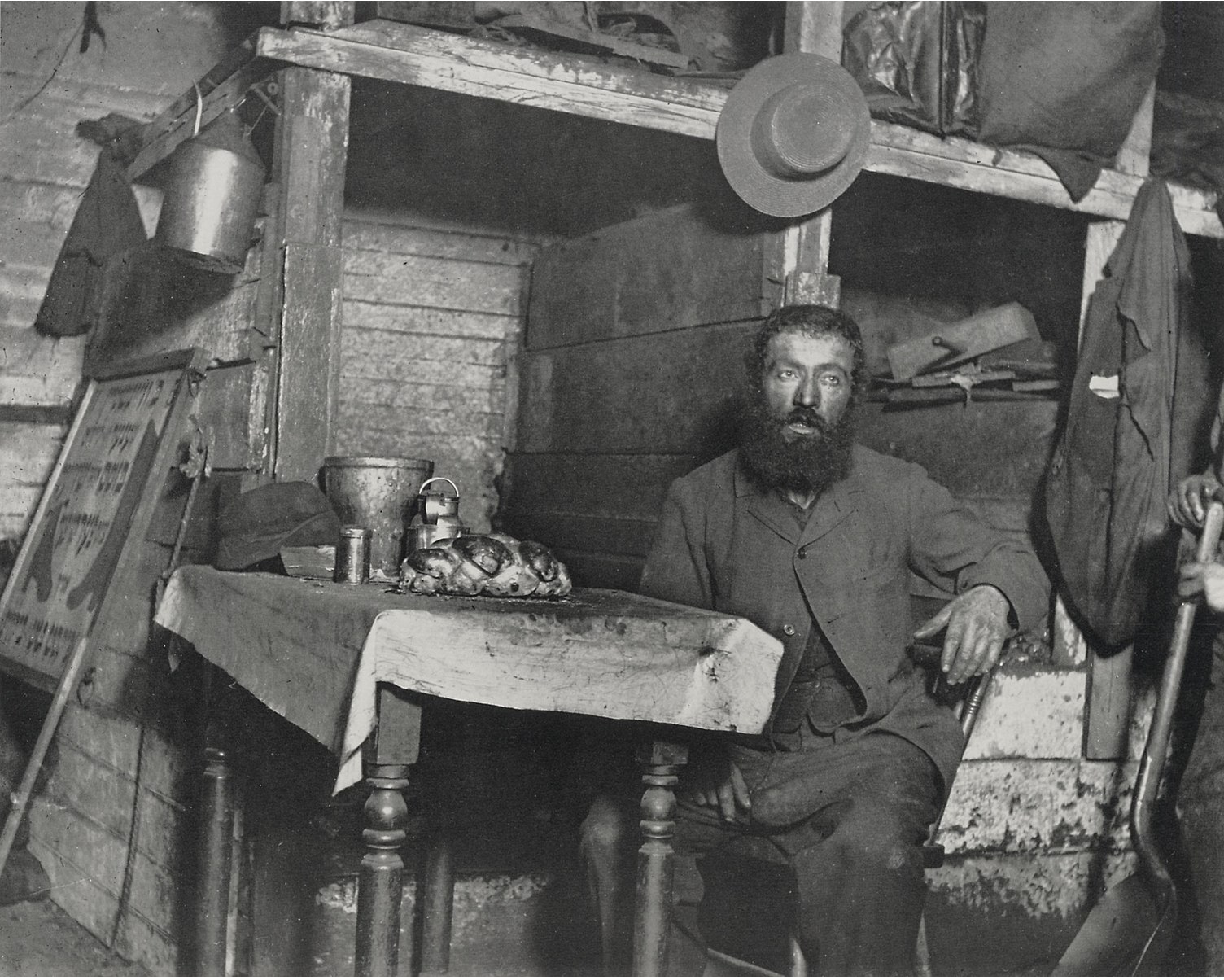
We think of ‘challah’ as the ubiquitous term for our Shabbat loaf, but it is actually a modern term used exclusively by Eastern European Jews, which has now spread to Jews everywhere to describe the plaited loaf one typically eats on Shabbat and holy days.
The first time the word challah is used to describe the Shabbat loaf is in 1488. It is possible that the braided Holle bread (read this article for more) sounded a lot like the biblical term challah. It’s not until the 17th century, though, that the term challah is used again to describe the Shabbat loaf but pronounced khale – the pronunciation challah is our 20th-century Anglicized version of the word.
I have had the privilege of speaking with a number of Holocaust survivors, in particular David Lerner – better known as Dugo (I will need to write more about him in the near future) and Josef Lewkowicz – who both called challah rolls in their childhood homes bulke (bulkalach or bilkelekh plural).

What of the South African Kitke? In Lithuania and Latvia, a plaited Shabbat bread or sometimes the plait over a regular loaf of bread was called kitke (possibly meaning wave). As the majority of the original South African Jewish community was established by Lithuanian Jews, the prevailing term for plaited sweet egg bread for Shabbat became known as kitke.

The appearance of the word challah to mean the Shabbat loaf and spelled in the way we are used to is in the Jewish Guardian (London, October 31, 1919) “challah. The twisted Sabbath loaf, [is] very often baked at home. It is of finer and whiter flour than ordinary bread. The word has been adopted by English bakers, and the ‘challahs’ are often seen advertised in provincial shops as ‘Jews’ Collars’.
New and Old Friday Night Comfort Food Recipes:
I know that food isn’t the answer to all our problems, but what if it was? This coming Shabbat I will be serving the most comforting food in my arsenal, so here is my shabbat comfort food menu:


