
read the blog post or jump straight to last weeks Friday night menu or the new Israel Salad Gazpacho recipe.
A Sunday in the Country
One of the loveliest parts of living in the UK over the last eleven years has been the occasional Sunday in which we have traveled to visit a stately home. There is something, well, stately about them. Dotted through the UK are these grand homes, mansions and palaces where great lords and ladies lived. Surrounded by their staff, tenement farmers and people whose livelihoods supported the Estate – and, in turn, the estate supported them – I think the systems hark back to the way land was looked after during feudal times.
Seasons of Power
Starting in the early 18th century, when Parliament sessions became a fixture of the social calendar — not just the political one — noble and aristocratic families as a whole would relocate to their homes here in the West End of London, and the estates would run themselves. Interestingly, these terms of Parliament were scheduled during what in London was called ‘the Season’, but what back on the estate or the farm would have been called the ‘off-season’ — when only the planting had to be done and the growing had to happen, but before harvest time; from about mid-January to late July.
It was a busy time for the social elite: girls had to debut, the country had to be run, social calls had to be made and marriages arranged. For the upper echelons of society, it was party after party, late nights and late mornings. And for the people who catered for them, it would have been even later nights and very early mornings.
Homes Built for Display


One can imagine that with all the socialising, one would be eager to get back to their home out in the country. Yet often these houses, always on a gargantuan scale, were for entertaining as well. The scale conveyed wealth and power, and the ability to host people for weeks at a time under your roof would have been not just another show of wealth but also a social necessity.
Jews and Social Standing
As I think about the size and function of these houses, I can’t help but be curious about two things: Jews and food…
First, in terms of Jews, what was their part in this society? Until 1656, Jews were not even allowed to live in England, having been expelled in 1290, so there was no idea of them having any part in society at large. When Jews are allowed back in, they held a place in society that they have held in others previously — they fill in the vacuum between peasants and nobility. Not that they are in the middle of this social hierarchy; rather, they sat outside it. They were, for all intents and purposes, running on a parallel line that interacted with the English hierarchy but wasn’t part of it.
Some Jews did have stately homes eventually, like the Rothschilds and the Goldsmids, but when they did, they treated them much like the non-Jews did theirs — that is, aside from Sir Moses Montefiore, who, when he built his home near Ramsgate in 1830, created a kosher kitchen.
Vast Kitchens, Cold Soup
Speaking about kitchens, these homes were meant for vast get-togethers. The halls (read: reception rooms) are massive, the dining tables reach out for yard upon yard — everything in the home seems to be focused on either entertaining or sleeping. And entertainment means (at least in my mind) feeding people.

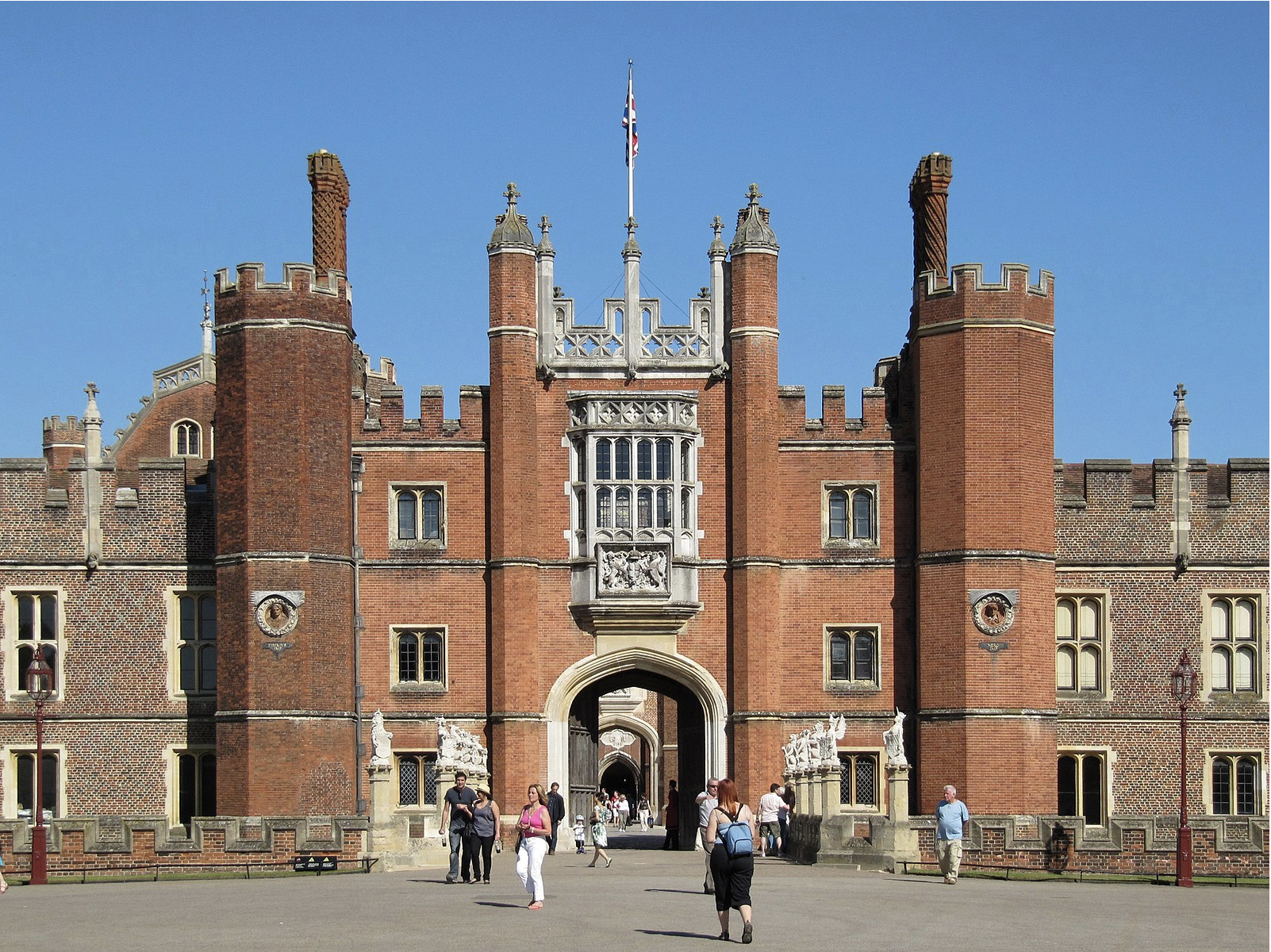
The kitchens in these homes are cavernous. In the homes that date back to the Middle Ages, like in Hampton Court that we visited yesterday, the kitchens are a separate building: different rooms for preparing different food items — a dairy, a preserving room, and surprisingly, a chocolate room, to name just a few.

And in later houses such as Syon House, that we visited the previous week, the kitchen is in the basement. Once conventional ovens were created, there was less of a chance of fire losing control in the kitchen as it would have when cooking over an open flame, kitchen were moved into the home.
The Poor Had No Kitchen
This is all well and good for the gentry, but what about everyone else? Most people actually didn’t have kitchens or the ability to cook in their own homes until the late 19th century. Those living in cities or even villages would grab one meal a day in their local tavern, and at best it was rudimentary. If you had outdoor space, you may have had an open flame set up outside. If you were slightly better off, you may have had a hearth to cook in. But the idea of a kitchen for everyone is a new one.
The idea of food, though, isn’t. Peasants would have spent the majority or all of their income — or items for bartering — on food. Sitting down as a family at the table for a meal was only reserved for the very wealthy, that is why the idea of breaking bread together held so much social and halachic (as pertains to Jewish law) power.
Jews, Bread, and the Baker
Jews were an anomaly in this way — not the kitchens, as I believe they found themselves in the same kind of homes (if you consider that in order to have a hot meal for Shabbat, Jews would take their cholent pot to the baker) but in that they sat around the table on Shabbat to break bread as a family, meaning that once or twice a week the family would come together as a unit.
I often get asked by students: why didn’t Jews hide their identity in times of trouble? Why act or look like Jews when society was against them? There are so many answers to this question.
The first is that they didn’t want to. The second: many did hide their identity and sadly lost that very same identity in the hiding. Others suffered the consequences of hiding that weren’t all that much better — and in some cases worse — than revealing who they were.
Third, society was so segregated along religious and socioeconomic lines, people recognised difference very easily and it would have been hard, if not impossible, to blend into a different stratum of this very hierarchical society.
Power Beneath the Wallpaper
Aside from deep thoughts about the stately homes’ kitchens and the way society divided and subdivided itself and the food they ate, let’s get back to random people (i.e. us) visiting other people’s homes on a random Sunday.
Firstly, in some cases the family still owns the home. In others, like Hampton Court Palace, it’s owned by the royal family. A way to bring in revenue, now that these homes are no longer supported by the farms around them, is to open up the home to the public and make it into a museum — with loads of history to learn and always with a beautiful garden to walk around in.
Like many things in England of the past, it is a gentle rolling green façade that belies the power that emanated — and today the wealth that these homes symbolise – for the families that still hold onto them. The lush tapestries, the wallpaper and damask coverings are a socially acceptable veneer for rooms that were once filled with intrigue, gossip and, more often than not, backstabbing.
Grateful for Cold Soup
Which makes me, in a way, grateful. Sure, it would have been interesting to be part of that world — but would it have been safe? Would it have been a place to be nurtured and looked after? Or was it a patina of wealth and class hiding a ruthless desire for power and influence?
As we start thinking about our life once we leave the UK in the autumn, I will miss deep thoughts about stately homes. But I will leave you with this question:
In all these stately homes — be it if the kitchen is built in an outbuilding or if it is in the basement — the food would have been cold by the time it was served, not helped by how cold these homes are. What would have happened to the servant who served cold soup to the master?
Ice for the British

But in the end, this is actually a blog about food. So while thinking about soup that should be served warm being served cold, I found myself wondering — did the English nobility know about gazpacho?
Some of them, after all, had ice houses on their estates — purpose-built brick chambers, often underground, where ice was stored through the warmer months. From the 17th century onward, and especially by the 19th, ice was imported from Norway and even from North America. It was shipped in by the ton, packed in sawdust, and stored in great ice wells, to be chipped away as needed. And when it was gone, it was gone.
But while they had it, I wonder — did they serve themselves chilled lemonade on the lawn? We know that England is the land of warm beer — but curiosity has me imagining: if some of the wealthiest families had access to ice, what exactly did they use it for?
That said, here is my gazpacho recipe below — picture and link will be ready soon.
And here is my menu from last Shabbat. Aside from a few of the items on this menu, all are recipes I’m trialing, and as soon as I am happy with each one, I will share the recipe with all of you.
Wishing you a wonderful day ahead, filled with peace and curious thoughts!


- Wine and Challah
- Chicken Soup and Noodles
- Chermoula Chicken with potatoes
- Daniel’s Roast Beef with Homemade Pesto
- Yellow Rice
- Green beans with tahini and sesame seeds
- Broccolini with shallots, garlic and black olives
- Cucumber Salad
- Blueberry Lime Cake
- Thin cookies
- Fruit
Israeli Salad Gazpacho:
Why Israeli Salad Gazpacho? With its origins in the Iberian Peninsula, most of us think of gazpacho as being tomato-based. But in truth, it was a soup probably brought to Spain by the Romans. It was made of leftover bread, olive oil, vinegar, and whatever vegetables were to hand — notably no tomatoes, as tomatoes only reached Europe from the New World in the early 16th century, and it took several centuries before people trusted that tomatoes would not poison them.
With time, tomatoes became the main ingredient of gazpacho, though there are also recipes for white gazpacho out there that use almonds as their base ingredient along with bread.
Yet, no self-respecting Spaniard would look at my soup and think, “Now there is a gazpacho!” To me, this soup has much more in common with an Israeli salad that was enthusiastically chopped up than a bread-based soup made of leftovers!
This soup, though, is refreshing, easy to make, and something I keep in the fridge as a go-to snack or appetiser on the hottest of days.
- 1 red onion, large chopped
- 1 clove garlic, minced
- 120 ml (½ cup) fresh lemon juice
- 120 ml (½ cup) extra virgin olive oil
- 1 tablespoon flaky sea salt
- 6 large tomatoes, large chopped
- 3 red peppers, seeded, large chopped
- 2 British (hothouse) cucumbers, large chopped
- 1 liter (plus extra) tomato juice
- Salt and freshly ground pepper to taste
In the bowl of a food processor fitted with the blade attachment, add the red onion, garlic, lemon juice, olive oil, and salt, process until liquid and no large pieces of onion are visible.
Remove the onion dressing from the machine and place in a large capacity plastic container that seals airtight.
Now process each vegetable individually, place all the tomatoes in the machine and pulse a couple of times until broken down, depending on your preference you can have larger or smaller pieces of vegetables. Decant the tomatoes and add them along with the onion dressing into the plastic container. Repeat the process with the peppers and then again with the cucumbers.
Once all the vegetables have been added to the plastic container, top with the liter of tomato juice, give everything a good stir, cover, and place in the fridge for 4 hours, giving the vegetables time to meld and the dressing time to mellow.
Just before serving, check consistency, you may need to add between a cup or two of extra tomato juice to thin it out as the vegetables will absorb much of the liquid. Once you have the desired consistency check the seasoning and season with salt and pepper to taste.
Soup can be made up to two days ahead of time.
One response to “Cold Soup and Stately Homes”
Hi Ilana, I just got around to this one even though I have read your more recent one about your Mom shocking you with her baking.
I found it very interesting about how they managed cooking in these huge stately homes in the old days. I often wondered about things like that and had also asked my mom how they kept food cold when they were in Europe. She told me they had some sort of a cold room and yes the cholent was brought home from the town bakery.
The stately homes are particularly interesting to me right now as I’ve been following an HBO/Max series called the Gilded Age where the American robber baron’s daughter marries the Duke of Buckingham (fictional)based on the Duke of Marlborough. She lands up having to move to a huge castle and get adjusted to
living in the castle on the estate. The castle is based on Blenheim castle or palace.
In any event, you might find the show interesting even though they don’t get to England until this season. The grand houses in the first couple of seasons are in NY near Central Park 1880-1890’s.
Shabbat Shalom!