
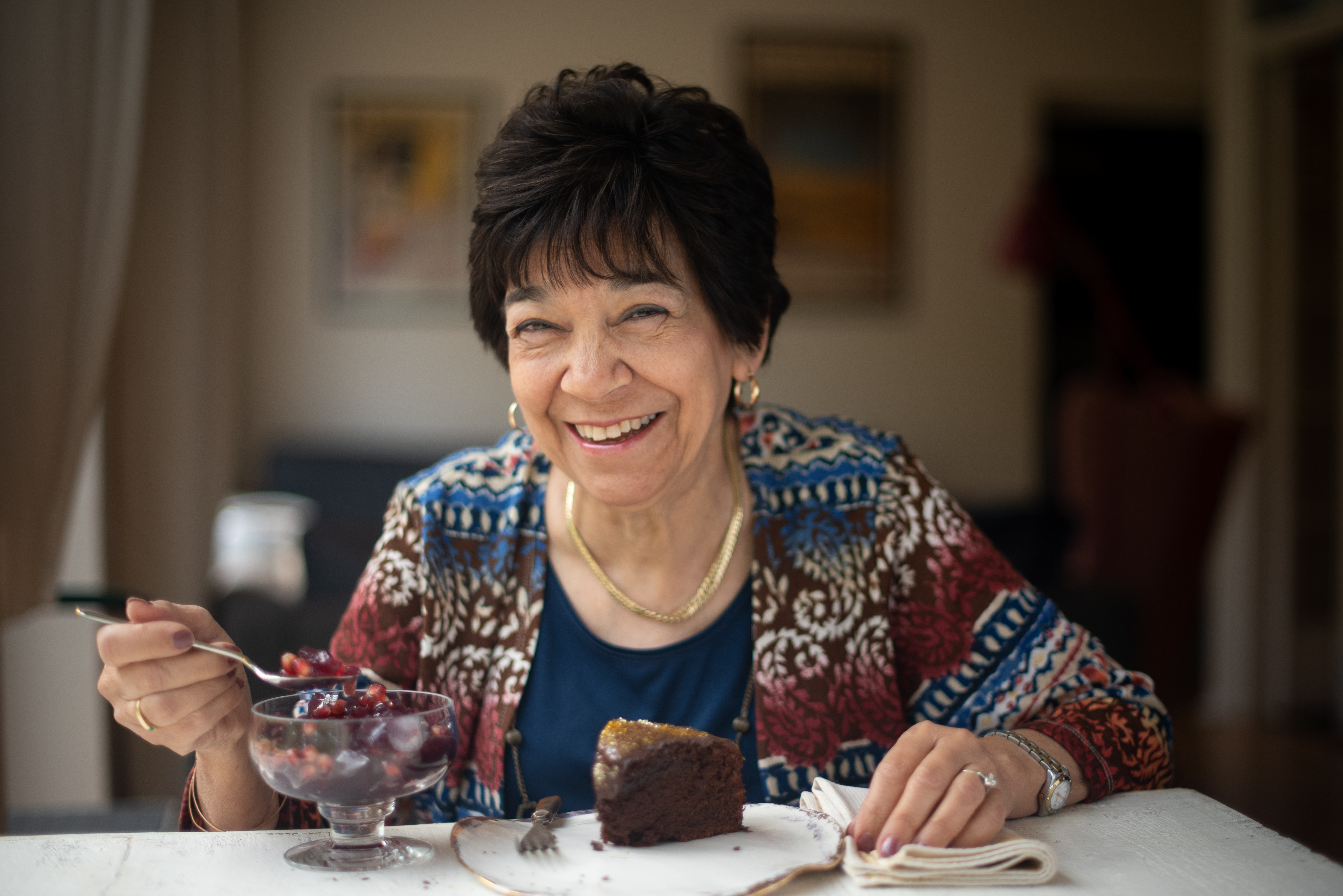
My beautiful mother Nira Spitz photographed by Blake Ezra.
You know that thing that your mom used to say, or at the very least, my mom would say?
In fact, it was two things. The first: whenever someone was mean to me for no good reason, it was, according to my mother, ‘because they are jealous’. The second thing was that ‘they’ are thinking about you far less than they are thinking of themselves. Not only did I often dismiss my mother’s age-old wisdom, but I would construct in my mind reasons why neither of those statements could possibly be true. How could ‘they’ possibly be jealous of me? I have so little in comparison to them. Could they not see everything that was ‘wrong’ with me? Why would they possibly ever want what I have, when they have all of that?
The second of my mother’s wisdoms was even more challenging to grasp. If they are actually thinking more about themselves than they are thinking about me, then why are they so focused on me?
Over the years, I have learned the truth of both the above statements, and I have had to translate them into a much bigger arena. The ‘me’ that ‘they’ are jealous of — it’s not just me, but it is me and my people. And the attention – and that can become something far, far more nefarious – went, once again, from being focused on me as an individual to my people.

I’m currently in Poland with the Holocaust Educational Trust’s “Lessons from Auschwitz” programme. Yesterday, I was with a group of 150 teachers from across the UK; most were history, politics or religious education (“RE”) teachers, coming to Auschwitz to be better prepared to teach the state-mandated module on the Holocaust. Towards the end of the day, two young men came up to me, both teachers—one a Sikh, the other Muslim, and I braced myself. Though I had encouraged the teachers to ask me anything, and I would do my best to answer, I saw the Muslims on the trip, and I was worried; I didn’t really want to have the discussion on what was going on with them. And yet, here was a young man named Babed, with his friend Krish, and they had questions.

Neither asked me anything about the situation in Israel; thanks go out to my mother once again for her truth that most people aren’t thinking about me most of the time. Rather, they had questions about God, Mohammed, and Buddha. After walking through Auschwitz and as we sat on the train tracks in Birkenau, they asked the age-old question of ‘Where was God?’ And we had a theological discussion on what it means to believe in God both during and after the Holocaust.
A teacher, a young woman whose name I never got, then asked me about the babies who were murdered in Auschwitz. She, a mother of a two-year-old girl and of Roma descent, realized that she too would have been discriminated against at a different time and place.
And then on the coach back, two teachers, Steve and Naomi, wanted to talk about everything. They did ask me about Israel, about what it means to be a Jew in the UK today, how angry they are that their students are being taught hate. That their jobs as teachers of politics, history, and religion are being taken over by TikTok and Instagram. That within 60 seconds, their students think they know everything there is to know about any topic because someone filmed something from their bedroom. In most cases, it’s only partial truth, but more often than not, it is wrong. They, as teachers, spend their time fighting a medium that is far more entertaining than they are—a medium that is teaching history falsely in sixty-second sound bites. No one, they said, not students and not their parents, reads a book, questions what they hear, thinks for themselves; while they will happily question authority, they will not question a TikTok influencer, a supermodel, or a Hollywood actor.

Back to Babed and Krish. Both practice their faiths in a way that I would call religious. Both expressed a sense of jealousy in Judaism, in our togetherness and peoplehood in the face of adversity. ‘After what happened here in Auschwitz, why did anyone stay Jewish? Why didn’t you just blend in with everyone else?’ ‘Today you can hide as well; no one needs to know?’ asked Krish.
The answer to Krish’s question was one I shared with all the teachers as we concluded our day; I am a Jew; it is a part of every cell in my body. I could not imagine being anything else. My Holocaust survivor grandparents must have felt the same because after surviving, after so many in their families had died as Jews, they chose to live as Jews. Are others jealous of us as my mother claimed? Yes, I think in some strange way they are. We represent three and a half thousand years of history; we are a tribe. When the going gets tough, and at the moment things are tough, the tough band together and support each other, in a way that the others don’t seem to do for each other. Our sheer audacity in surviving through so much instills in us a deep-seated desire for peace, and we are still learning, still teaching, still loving, still sharing—that is something to be jealous of.
But what about the second of my mother’s wisdoms? That they are mainly thinking about themselves? It didn’t feel that way when 100,000 people protested against Israel this past Shabbat in the streets of London. But it was. It was all about them, and not about us. You all know this. If you were to ask them from “what river” to “what sea”, what do intifada, genocide, or apartheid mean, most would not be able to answer you. If you asked them if they had ever been to Israel or Gaza for that matter, most would say no, have they ever met a Jew? No.
What, in fact, are they protesting against?
This goes back to the teachers, the ones who are competing with TikTok to educate. Have the protests become a way to express anger and frustration for lack of depth and lack of knowledge? Are our leaders—political, academic, and religious—letting our young people down? I don’t actually know, but I do know this: the protests, the hate, the horrible images, and trolls have little to nothing to do with me and everything to do with themselves.
So many protesters are trying to draw comparisons between the Holocaust and the current situation in Israel, putting the Jews in the place of the perpetrators. Firstly, that is beyond absurd, please know that, and comparison is wrong.
How though is it about them and not us? Even as Nazi Germany was losing the war, and it was most definitely losing the war, they diverted essential resources from the front lines to kill all the Jews of Europe, bringing them from Corfu and Oslo to Auschwitz. It was more important to them to kill Jews than to save their own people. This is all about them, their irrational hate. This isn’t because of us and who we were or who we are. All of the Nazi rhetoric was about what the Jews are doing to ruin their society, their economy.
To paraphrase Golda Meir, another wise Jewish mother: until they can love their children more than they hate ours, this will continue.

How does this help, though? A question I often asked my mother as well. It’s all well and good to know that they are jealous, and that this is about them and not about me, but how does this help?
It does help, in that we need to know we don’t need to change who we are.
We do not need to hide.
We do need to be proud of who we are and where we come from, of the survivors behind us and the generations ahead of us, who will wear their peoplehood with pride.
Because like my mother, we will share with them the wisdom of our experience.


In honor of my wise mother and my grandmother before her, I’m posting three recipes that are 100% theirs. Often, I play around with recipes in one way or another, but these are so perfect and, in fact, a perfect snapshot of my childhood that I have left them precisely as they were handed down to me. (That is, aside from sneaking some orange peel into my grandmother’s date cookies – I wonder if she would have minded?)


2 responses to “Jewish Mothers and Their Wisdom”
Hi Ilana,
I loved this article. The wisdom of our parents passing onward to the next generations. And of course when our parent share their wisdom and experiences we don’t always get it right away, but somewhere along the paths we take the light bulb goes off. Thanks again for all you do in educating the world about the Holocaust. I’m the child of a survivors. My father z”l was a three year survivor of Auschwitz. The lessons and foundation for living our lives that he and my mother have taught us are priceless.
Thanks for sharing this article and your recipes. I cherish the recipes I have from my mother and her Oma who unfortunately I never got to meet.
Nomi
Dear Nomi,
Thank you for your beautiful note, yes, it usually takes us a while to relize how right our parents were, if only we could appreciate it as they said it!
May your father’s memory be a blessing to you and others for a long time to come. and may the lessons your parents shared help others in the future.
All my very best,
Ilana