
This week:
- Reflections on this past Yom Kippur
- Sukkot traditions
- The Sukkot challenge (aka eating outdoors for 7 days)
- Overcoming Challenges and Enhancing the Sukkah Experience
- My Sukkot menu
- In other (non-Succot) news
- Waitrose Survey
Reflections on this past Yom Kippur:
I always feel anxious about Yom Kippur. Fasting has never been my strong suit, especially when it’s combined with one of my favorite responsibilities, which is greeting and catching up with many women in my community. Some of these ladies I won’t see again for a whole year, and I find it crucial to say hello. Others I see every week, and this interaction is equally important to me, as it aligns with my role as a Rebbetzin. But how do you manage when fasting isn’t your strong suit? My solution has been to prioritize these greetings early in the day.
However, the best advice I received came from Chaya of London, who shared a story on Instagram just before Yom Kippur. She emphasized that we shouldn’t pressure ourselves or become anxious about Yom Kippur. I’ve shared this wisdom with many people over the years, but no one had ever shared it with me, and it truly made a difference. I decided to take Yom Kippur one moment at a time, greeting as many people as I could, without being hard on myself if I missed someone. I prayed when I could, without criticizing myself if I got distracted.
Regarding fasting, I approached it one moment at a time and chose not to feel like a martyr when my body reminded me it doesn’t tolerate fasting well. Instead, I accepted the discomfort and knew it would pass soon. Am I spiritually uplifted after a day of prayer and no food? I’m not entirely sure, but I can say with certainty that I’ve gained more compassion for myself and, in turn, for others.

Sukkot traditions:
All four of my children tell the same story: while discussing Sukkot at school and being asked about the customs and obligations of the holiday, each one of them raised their hand and said, “Is it a biblical obligation to never go into or leave the sukkah empty-handed?” Firstly, let’s clear things up here. It is not a biblical obligation. Though I drilled it into my family’s consciousness so effectively, it must feel like it.
I have always found Sukkot a challenge. Making sure things were constantly moving in and out was such a massive concern that I have passed that on to my children. It was so effective, that they, even now, almost all grown up, think that Moses, while holding the tablets, commanded the Israelites to ensure they never go in or out of the sukkah empty-handed.
The Sukkot challenge (aka eating outdoors for 7 days):
Sukkot should be one of those holidays I rave about. It has all the elements I love in a holiday: countless meals with unsuspecting guests to try out recipes on, a whole new space waiting to be decorated, traditional foods, and over 3,000 years of Jews celebrating in the same way. And yet, year after year, my reluctance to celebrate grows. I decided this year to explore why that may be and, obviously, find some solutions to my unusual (for me) response to a Jewish holiday.
Exploring Sukkot: Overcoming Challenges and Enhancing the Experience:
- Timing – Truly, are we not exhausted? We have by now celebrated Rosh Hashanah and Yom Kippur, and only four days after we have fasted and wiped the metaphorical slate clean of our sins, I am running up and down stairs, and in and out of an unstable hut, serving meal upon meal; all the while racking up a whole new Excel spreadsheet of sins. Listed on the spreadsheet will be all the curses I will say as I stub my toe, drop something on the floor, or have to get up for the millionth time.
- The great outdoors – I know people love eating al fresco, and it has its charm and delights. In fact, studies say it makes your appetite better. I am yet to perceive the charm. On Sukkot, in my experience in both the UK and America, it is almost always cold, it will inevitably rain, and there is never a fire pit and s’mores to be made. Alternatively, you can be in Israel where it is sweltering in the middle of the day, and instead of your chicken soup being rained on, which, to me, adds to the true flavour of Sukkot, you will be dripping sweat and sunscreen into your food.
- The great outdoors 2 – as you can tell, I’m not a fan. Bees and wasps are wonderful and needed to help this amazing world of ours do its thing, and yet I wish they weren’t so enthusiastic about me as a person.
- Folding Chairs and collapsible tables – the impermanence of the sukkah means that the ground, in many cases, is not level. Either you or your chair is sinking into the ground, and the table is definitely doing its bit to comply with the rabbinic need for impermanence.
- Distance – unless you have a sukkah in your kitchen, the distance between your kitchen and the sukkah table feels enormous, and you can find yoursef going back and forth a billion times.
I can go on, as you can imagine, with complaints – my list is inexhaustible. But over the years, I have come up with strategies. Here are a few. I hope that if, like me, you find Sukkot challenging, these strategies can be of help. If, on the other hand, you love Sukkot – more power to you!
- Reduce Friction: Every tip is going to be about minimizing the friction. Every time we get up (or at least this is true for me), we build up friction. If you weren’t already exhausted or irritated or frustrated at the start of the meal, by the time you have gotten up for the hundredth time and gone into the house and back out to the sukkah, you will be. So, most of my tips are about how to reduce that friction.
- Have extras already in the sukkah: If you have space for a cupboard or box of some sort in the sukkah or just outside it, store in it anything you can think of, like extra plates, cutlery, glasses, serving utensils, napkins, salt and pepper, toothpicks, and drinks. On occasion, I have stashed a small medical kit with band-aids and aspirin – and I have never regretted it.
- Hot water urn: If you can set up a hot water Shabbat kettle in the sukkah and have all the makings for tea and coffee ready to go, as long as you keep it safe and the wires dry, this can be a game changer.
- Cook all-in-one dishes: This minimizes the up-and-down and in-and-out. I bring out my pie, all-in-one, or casserole recipes for Sukkot, chicken pot pie or a shepherd’s pie or a pot roast, and a salad. I call that a meal!
- Opt for Hearty Soups: Serve them directly at the table. Instead of ladling a thin chicken soup in the kitchen and attempting to carry at most two bowls at a time, chances are, if you’re anything like me, half the soup will spill on the floor, while the other half is cold by the time it reaches the table. Instead, prepare thicker soups that are less prone to spilling in the bowl, and present the entire pot at the table for serving.
- Simplify dessert: At a regular meal, I usually put out not just the ‘main dessert’ but I have extra things to nibble on – chocolates, cookies, fruits. I tend to overburden the table with desserts. Instead, make one dessert – I feel like a simple cake will do for most people. While we lived in Israel, I used to buy loads of ices (ice lollies) and serve them as dessert.
- Stay in season: Late summer and early autumn are the perfect times for my favorite no-fuss fruits, such as grapes and tangerines (satsumas). They require almost nothing from the cook, and unlike melons or pineapples or mangoes, you don’t have to do much to them before they hit the table.
- Ask for help: during the year everyone streaming into your kitchen all at once may be the least helpful thing you can think of – on the other hand on sukkot it may lighten your load. I usually set up everything that needs to go into the sukkah on a kitchen counter or the regular dining table and tell people to grab things on the way into the sukkah.
- Focus on the company: Most of us love people, so staying focused on them, rather than the constant up and down and in and out, really helps me.


My Sukkot menu:
- Wine and Challah
- Roasted Garlic Butternut Squash Soup
- Pastilla – Moroccan Chicken Filo Pie
- T’Beet – Iraqi Jewish Chicken & Rice in a Pot
- Green Salad and Broccoli
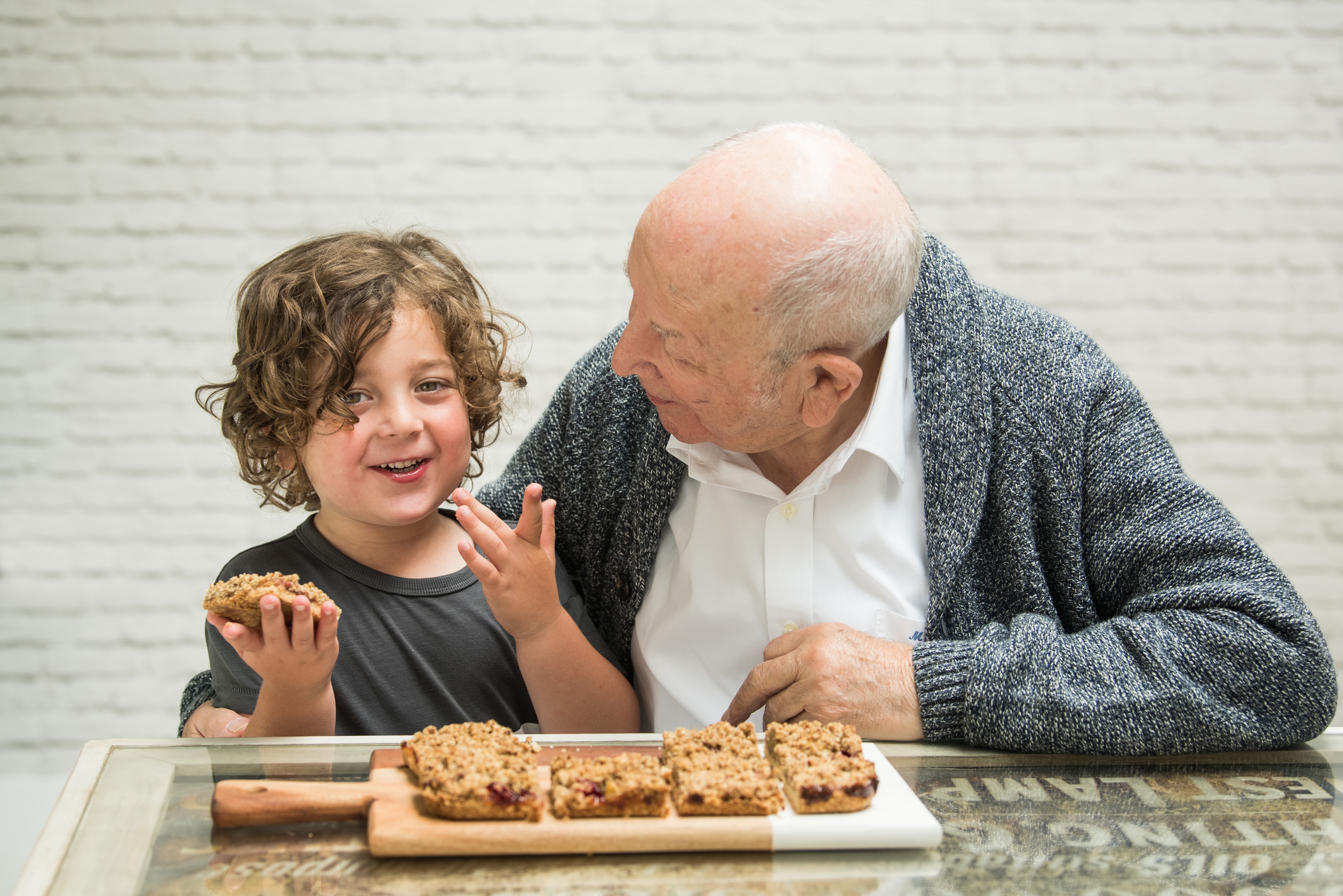
- Streusel Bars (I will be making them dairy free for this meal)
- Grapes and Tangerines
In other (non-Succot) news:
On July 6, 2023, Waitrose (is a large supermarket chain her in the UK) issued their food report and here are some of the things i found fascinating: Waitrose Survey
Out of the 4,000 individuals waitrose surveyed, here were their thoughts:
Top 10 Kitchen Gadgets people in the UK couldn’t live without (people were asked which single gadget they couldn’t live without):
- Microwave
- Air fryer
- Slow cooker
- Coffee Machine
- Food mixer
- Food processor
- Blender
- Electric whisk
- Hand blender
- Rice cooker
Making me feel so much better about burning cabbage last week was the following statistic – which I hope makes us all feel better about kitchen mishaps:
- 46% of people often get distracted and let pans boil over and…
- 38% revealed they have burnt something so badly the smoke alarm went off.
- 38% use the ‘five-second rule’ for picking up food that has dropped on the floor, choosing to believe that food is less likely to get contaminated and therefore ‘safe’ to eat
- 27% have put too much salt in something.
- 23% have undercooked or overcooked a dish so it’s inedible.
- 18% have failed to remember they’ve cooked something in the microwave and found it the next day.
I love the next items – because it definitely speaks to the way I cook and entertain:
- 34% think that the term ‘dinner party’ is old fashioned
- 29% always want their gathering to feel ‘effortlessly casual’.
- 49% of cooks surveyed said food needs to be quick and easy to cook.


The gadgets I used most this week:
The Meat Chopper! Who would have thought that this would turn out to be one of the most satisfying and practical items I’ve purchased in a long time? I realize this might sound like an exaggeration, but it has completely eliminated the frustration of hacking away at ground (minced) beef to break it apart. If, like me, you’ve found the process of breaking apart ground beef unreasonably frustrating, I highly recommend giving this a try!
The Onion Goggles: Last week, I mentioned the OXO Good Grips Vegetable Chopper , which has significantly improved my cooking efficiency. Many of my dishes start with frying onions, but I tend to tear up so much while chopping them that I often try to avoid the task. Lately, I’ve been purchasing pre-cut onions, either fresh or frozen, to save time and frustration. However, when you think about how many onions I use, it can get expensive.