
Jump straight to: And more places to eat in Jerusalem or to Two New Rugelach Recipes
What’s your favourite musical? Your favourite play? Your favourite book? Your favourite composer? Your favourite city?
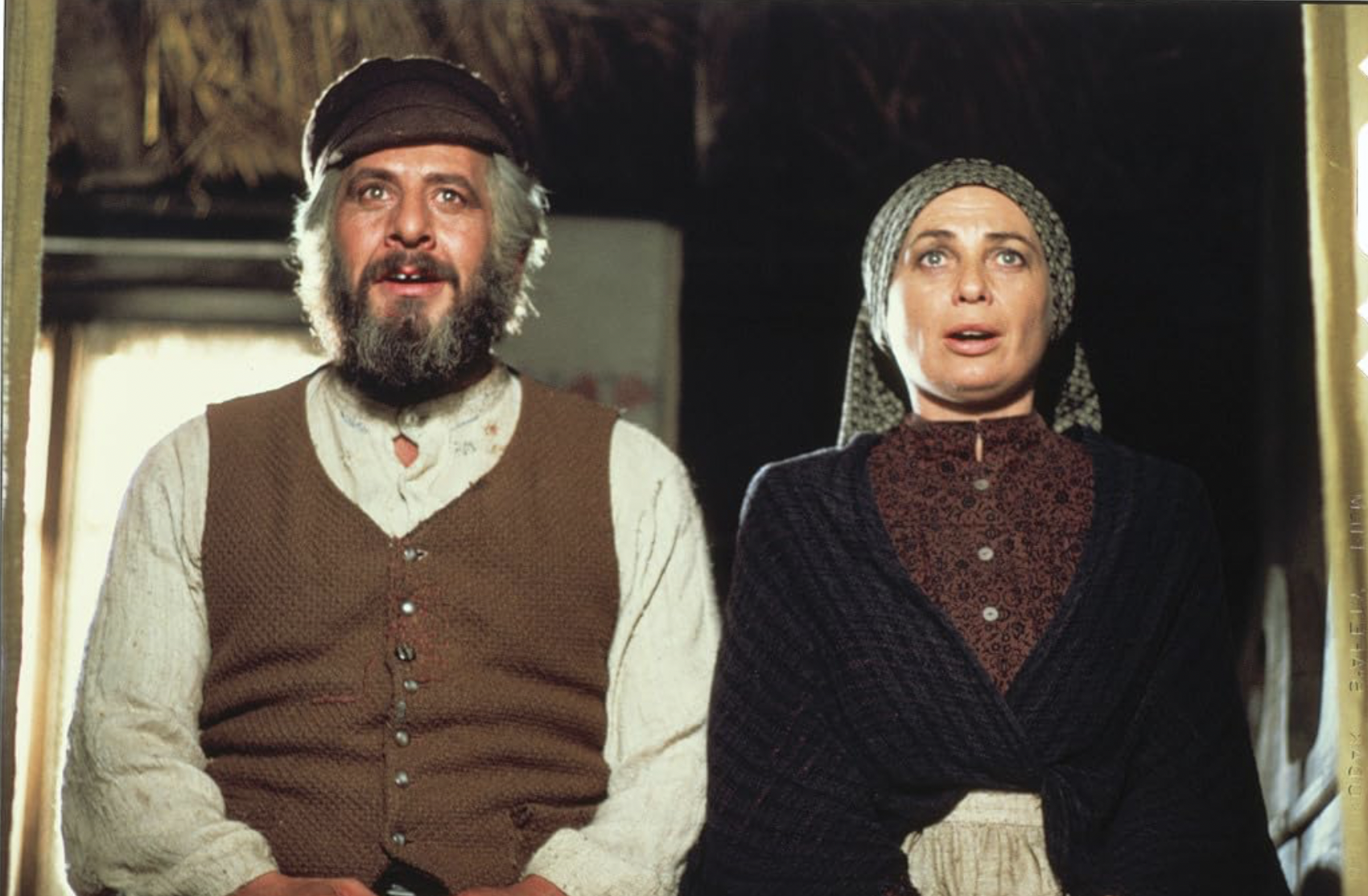
Fiddler on the Roof, The Importance of Being Earnest, Pride and Prejudice, Hans Zimmer, and Jerusalem.
I actually think that a Jewish version of Pride and Prejudice—with Tevye and Golda playing Mr and Mrs Bennet, Tzeitel as the beautiful Jane, and Hodel reborn with the witty, main-character energy of Elizabeth—written by Oscar Wilde, scored by Hans Zimmer, and set in Jerusalem—would be box office gold. Or is that just me?
After all, stories about love, family, and change never stop being relevant.
I wonder if these are my favourites because I was exposed to all of them at around the same age? In my early teens, this is what I was reading, watching, and listening to. And the summer I was sixteen—while most of my friends were exploring Israel on Bnei Akiva and other youth group tours—I was busy working in Jerusalem, in the then OU/NCSY centre on Strauss Street, just metres away from the ultra-Orthodox neighbourhood of Mea Shearim.
As I walked out of the office at the end of the day, I would see ultra-Orthodox couples—clearly on dates—walking up and down the street. In later years, and still today, you can find these sometimes awkward pairings in hotel lobbies across Jerusalem. Until then, I hadn’t been aware that the matchmaker culture we’re introduced to by Yente in Fiddler on the Roof was alive and well in Jewish communities across the globe, but especially visible in Jerusalem.
It struck me then, though I couldn’t have articulated it at sixteen, that matchmaking wasn’t just a quaint relic from the shtetl, it was and is still part of how traditional communities balanced love, family, and continuity.

Golda and Mrs Bennet are both obsessed with the marriages of their respective five daughters (though in Sholem Aleichem’s stories of Tevye the Milkman, he actually has seven daughters). The stories both gain their momentum and direction through three of the daughters’ relationships. In Fiddler, each daughter and each relationship represents a step away from tradition, from the family, and from the shtetl. While in P&P, each marriage sees the daughter choose independently of her parents, who, though Mrs Bennet is acutely aware of her daughters’ need to marry, does nothing to help them and much to hinder their prospects.


Jane Austen gives us an example of good fortune through Jane, whose beauty and gentle character allow Bingley to shrug off the expectations of his family and marry her. Lydia makes all the wrong choices and must marry, while Elizabeth’s struggle is the romantic heart of the story, her strength allows her to make mistakes, learn, and ultimately come through them wealthy and landed on the other side.


Each one of the three Bennet sisters, like the Fiddler sisters, represents a different relationship with tradition. There’s the one who stays. The one who challenges but moves things forward in a way that, though uncomfortable for the family or the community, isn’t a full break. And the one who puts herself outside the fray completely and is no longer counted among them, aside from in whispers.
I have been thinking about how certain stories stay with us, how the tension between tradition and change plays out whether you’re in nineteenth-century England, a shtetl in Eastern Europe, or Jerusalem today.
Both Fiddler and Pride and Prejudice are stories about tradition versus change. Fiddler was set in Sholem Aleichem’s own time — he too left the shtetl and settled in America, during a period when millions of Jews were leaving Eastern Europe and making their way west, primarily to America. Jane Austen was writing during a time when Britain was at war with France, yet for much of the English countryside, life went on in relative peace. The nation stood on the cusp of the Industrial Revolution and the Victorian era, when steam and steel began to shrink distances, blur class lines, and alter the rhythm of daily life beyond recognition. And with these external shifts, both in the shtetl and the English countryside, family and community dynamics were changing as well.
Though Sholem Aleichem and Jane Austen lived a century apart, if you consider rural, fictional Anatevka (a fictional shtetl in the Pale of Settlement in the early twentieth century) and the English countryside of the early nineteenth century, in terms of technology they were probably in much the same place. Both authors were looking at the advent of modernity through the lens of family dynamics, using each daughter, a powerless pawn perhaps in their estimation, pushed here and there by tradition and family expectations. The daughter “breaking free” of those expectations is, in fact, their way of grappling with tradition. It is the tension and the choices that both authors were exploring through the same kind of characters.
Why tell you all this? Am I just revisiting high school comparative literature, or do I have a point to make? We are now just over a hundred years on from Sholem Aleichem, and two hundred from Jane Austen. Neither of those authors could have imagined the changes that have occurred since their passing — how far we have advanced technologically. And yet, war and displacement are still very much at the forefront of our lives. So, it seems, are matchmaking, misunderstanding, and the eternal hope of finding happy couplehood.

In 2004, British filmmaker Gurinder Chadha recreated Pride and Prejudice in Bollywood style. The resulting Bride and Prejudice is one of my all-time favourite films. It’s basically Pride and Prejudice set in India, with visits to family members not in the countryside but rather in LA and London. Jane Austen, I believe, would have loved it, and the creators of Fiddler, inspired by the writings of Sholem Aleichem, would have recognised that it’s a story begging to be turned into a musical. The film is fun, still feels relevant and current, and has a happy ending. What more could you want?
What this tells me is that as the world propels itself forward at the speed of light, we fear that tradition will be lost in the constant race to keep up. Change has become a virtue in itself, sometimes more valued than what came before. Yet tradition, even when it needs to be questioned or reinterpreted, carries its own worth; it has survived because it still has something to teach us. The challenge is to keep what still works, even as we make room for what needs to change.
As Jane Austen wrote, “It is a truth universally acknowledged, that a single man in possession of a good fortune must be in want of a wife.” Some things, it seems, never change. It is a sentiment Tevye would agree with wholeheartedly. Why else would he have initially accepted Lazar Wolfe the butcher’s proposal? But I digress.
For now, while I’m in Jerusalem for a few more weeks, I’m not thinking about anything too deep. It would, however, be a dream come true if Oscar Wilde were to write the Jewish version of Pride and Prejudice set in Jerusalem. Let’s call it Matchmakers and Mensches and have Hans Zimmer write the score.
And more places to eat in Jerusalem!
I keep promising myself that today is the day I’m going to make healthy choices, and then I’m drawn in. One of our friends, who is on a work visit to Jerusalem this week, put it best when he declared that he planned all his free time based on which restaurants he would be visiting.

Mojo’s – If you keep kosher and yet the idea of a pepperoni pizza appeals to you, Mojo’s is the place. With menu items such as butter chicken wings, ranch dip for popcorn chicken, and of course meat pizzas, Mojo’s knows its clientele. In a world where you can have parve cheese or parve meat, if you consider a Jewish clientele (many of whom have a predisposition to lactose intolerance), the choice is simple: vegan cheese! This is just such a fun place to eat, and the staff is super friendly.
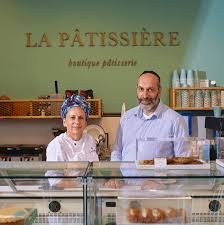
La Pâtissière – On Keren Kayemet L’Yisrael Street. My love of pastry knows no bounds. This small café’s unpretentiousness belies the absolutely impeccable pastries on offer. Try any of their croissant variations.
Hummus Bracha – In Mamilla. The Mamilla pedestrian mall is now such a mainstay of Jerusalem that it’s hard to believe there was ever a time it didn’t exist. It has quite a few restaurants, though my favourite is the simple Hummus Bracha inside. The falafel and hummus are always fresh and super moreish.
Cafe Ramban – Last week we ate dinner at the meaty Janjariya restaurant in the new Ramban Hotel, and this week it was the turn of the milky Café Ramban. I’ll admit, I needed almost every dish on the menu explained to me, but once I wrapped my head around it all, the dinner was absolutely delicious and surprisingly unique.
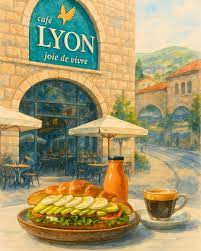
Cafe Lyon – Situated on Jaffa Street just outside the Shuk Machane Yehuda, this café may seem a bit hit and miss. If you sit outside, as we did, be prepared to be approached for directions, charity, or both, countless times. Don’t let that put you off. Daniel and I ordered the crack pie. I don’t know exactly what’s in it, and the name itself makes such a question moot. Regardless, it was as good as the name claimed!
Two New Rugelach Recipes:
Being in Jerusalem has me gravitating to the shuk over and over again. In the shuk, there’s a bakery called Marzipan, made famous for its rugelach. The rugelach are filled with chocolate, and the dough is only just baked. Trays come out of the oven and are placed on cooling racks while being sprayed with sugar syrup. The racks sit right on the shop floor, surrounded by equal numbers of bees and customers.
When purchasing the rugelach, there’s no claim to individual ones — you basically get a slab of nearly baked, fully attached, sticky, chocolatey, yeasty dough. From the top, they resemble rugelach, and they’ve come to define what a whole generation thinks rugelach is.


Here is my version of Jerusalem-Style Rugelach. In all honesty, mine are fully baked, yet still sticky, chocolatey, and delicious.
Before being introduced to the yeasty version of rugelach, to me rugelach meant a buttery cookie pastry filled with jam and nuts. In retrospect, these Cookie-Styel Rugelach, that’s a very American interpretation of the pastry, and because I love anything with jam, these cookie-style rugelach are my dream food.
Regardless of which type of rugelach speaks to you, both recipes are all about the roll. There’s something deeply satisfying about rolling and cutting into filled pastry — it adds a touch of magic to the whole enterprise.
One response to “Of Golda and Mrs Bennet”
totaly agree, to new production.