
& The Joy of Cooking & Educating
This past week, with colleagues from the Holocaust Educational Trust and my seventeen-year-old son, I went to see the film “The Zone of Interest.”
A colleague let me know that a group of them were going to see the film and asked if I would like to join. Having heard nothing about the film, I asked my movie-buff son, who informed me that it had been nominated for an Oscar, and he would love to join.
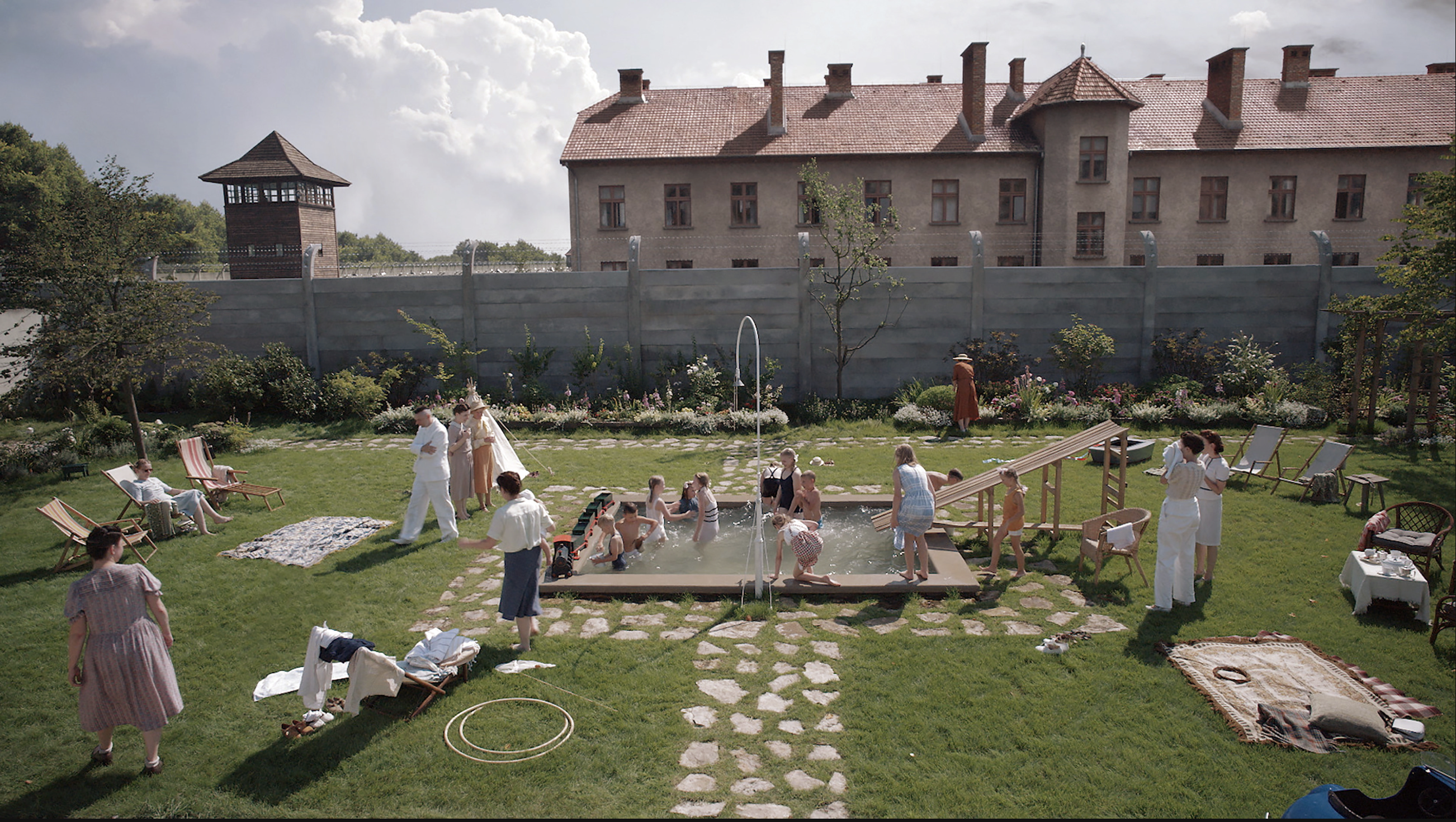
The film is about Rudolf Höss and his family. Höss had been the commandant of Auschwitz, and his family lived on the grounds. On the many trips I have taken to Auschwitz over the years, we always point out to students where the house still stands and how close it is to the crematorium in Auschwitz I and the barracks that held prisoners. But never once could I have pictured what the filmmaker was able to recreate.
The film opens with a dark screen for a very long time, and when we are finally shown an image, it is of a family playing along the banks of an idyllic river. This idealized life continues throughout the movie, but the cracks show very early on. I won’t give away anything, other than this. At no point does the film show anything of what we have come to expect from Holocaust films. We see glimpses and reflections; we barely encounter the victims; at least not as we have been accustomed to in these type of films. And yet, the filmmaker manages to touch on so many themes that, now a couple of days after watching the film, I can barely wrap my head around it.
The credits were when I actually called it quits, as at that point, I had reached the limit of what I could take in at one time.
This isn’t merely a film recommendation; it’s an educational one, one that perhaps we need to discuss considering the state of the world at the moment. It’s an idea I seldom embrace, but I’m learning. Less is, in fact, more.
I discussed with the same colleague who invited me to the film how we can help students who want to speak out here in the UK about antisemitism. My thoughts on this are that antisemitism is so big and so old that there are very few experts in the world.
But we can all choose one idea that we can tackle and make that our platform, be it the ‘Rape is not Resistance’ movement or understanding what ‘From the River to the Sea’ actually means. How long have Jews called Israel their homeland, or how many times is Jerusalem mentioned in the Bible? Choose one idea and own it. And for the rest, refer, or don’t answer. It’s better to be an expert at one talking point than to know very little about alot of things. Unfortunately that is the fastest way to lose an argument. But what happens when someone comes at you with a barrage of reasons for antisemitism and why Jews are, or Israel is _______ (fill in the blank)?

The first comeback: I heard the following from my friend Marc Cave, the CEO of the National Holocaust Centre and Museum. He said it’s time we call antisemitism what it is – racism. Calling it something else separates it from what it is and gives people who hate Jews justification for that hate. By calling it racism, all of a sudden, we have shifted the argument. Most people agree that racism is wrong. Therefore, antisemitism is wrong.
The second: it’s okay to say ‘I don’t know.’ For example, did you know that Israel has agreed to a two-state solution multiple times over the last 75 years? If you didn’t know this – that is okay (to read a bit more about this click here).

What I do know about arguments is that if someone is calling for your death and you are asking for peace, you are probably not in the wrong. If someone wants you wiped off the face of the earth, and they are doing it using tropes and slogans they don’t understand, nothing is more infuriating to them than when you come back with logic, considered opinions, and facts.
What “The Zone of Interest” did for me, not just having me thinking more deeply about Auschwitz, but the filmmaker’s approach. He looked at the life of one family in one house over the period of a few months, but mainly a number of days in the summer of 1943. From that vantage point alone, I was able to draw my conclusions without the filmmaker spelling it out. That some of the characters, in their insatiable greed, let go of all of their humanity, and in that, they sacrificed not only millions of innocent souls which is abominable, but their avarice was so great that they sacrificed their own family as well.

Photograph by Orsolya Haarberg
In this fight – the one we are in at the moment – I now wonder a few things. Can we look at one scenario and just from that learn everything there is to know about our enemies and ourselves? I think the answer is yes. The big picture is important, stepping away and seeing it all is something I crave. But we are currently still in the thick of this battle, and we cannot yet discern the forest for the trees. My thoughts, like in “The Zone of Interest,” look at a tree, learn about that one, because chances are that it will tell you the story of the whole. Just to take the analogy a step further, because every tree is a part of the forest, and it is feeding from the same ground, being showered with the same rain as the rest.
So listen, learn, and then consider focusing on one idea and make it your own, and who knows, next week you can add a second idea and then a third.
The Joy of Cooking & Educating:

I’m a Jewish educator, having never been a non-Jewish educator. I don’t know if this is universal regarding educators. Teaching and educating are skills; it’s not always about the subject. It’s often about the educator’s ability to share information in such a way that the student not only hears it but retains it and hopefully finds a spark of inspiration to keep them coming back for more. In that sense, as a Jewish educator, I find myself educating on a variety of subjects and to diverse audiences, be it non-Jewish teens as part of the Holocaust Educational Trust’s “Lessons from Auschwitz” program, the Conference of European Rabbis’ (“CER”) “Rebbetzins program”, or even sharing my love of food and ideas for recipes and organizational tips on this platform.

Last night while teaching the CER Rebbetzins, the topic was entertaining, which isn’t the same for Rebbetzins as it is for your average Jew in the pew. For a Rebbetzin, it’s part obligation both contractual and professional. It is something that a Rebbetzin, aside from extenuating circumstances, has to have a revolving table of guests and often copious amounts of food, regardless of her energy level or many other things happening in her life. So, though one may think our evening session about entertaining was a recipe swap, it wasn’t, it was a deep conversation about our roles as community leaders with a myriad of expectations not often associated with other community spiritual leaders.
One of the women stopped me in my tracks. She is lovely, super engaged with her community, creates weekly content, gives shiurim, runs the local Jewish nursery. And she said that despite that, she thinks she is failing because, in her words, ‘I hate to cook.’ There is nowhere to buy ready-made kosher food where she lives, and everything needs to be made from scratch, and she is expected to host people every week.
If you are here, chances are you like cooking, or you like my writing – which is amazing. But what to say to someone who needs to cook as part of their job but hates doing it, and the obvious solutions aren’t available?
This is one situation I would like to think on for a bit because I don’t think distraction is a solution to a real challenge. The ‘watch something’ while you cook, the ‘do it first thing’ in the morning so it’s done also doesn’t satisfy me as a solution. I think the way to overcome a challenge is usually the hard way; it’s a mindset shift, finding the joy in the task at hand even if that is difficult. Distractions will only work for so long, especially if this is something you need to do week in, week out.

Here are the ways I have found joy in cooking: My joy in cooking comes from the repetitiveness of cutting, the zoning out while chopping anything. The colors that nature provides, the smells of anything with cinnamon wafting from my oven. The physicality of kneading bread. Finding out someone’s favorite dish and serving it to them. The camaraderie of sharing a homemade meal.
I plan on going back to said Rebbetzin with ideas, not shortcuts, though I totally approve of shortcuts for cooking. But not for changing your mindset; that is the hard work, and it is work she will have to come back to daily until it no longer presents a challenge. And this is why I love educating.
What is the mindset shift you need to make? Mine is about self-confidence – the work of a lifetime, but I’m in this for the long haul, so bring it on!
New Recipes:


Three new recipes and each brings me joy in its own way. They are three recipes, Homemade Basic Tahini, Homemade Hummus, and The Meat from Hummus im Basa’ar. Each recipe can be made on its own; they are, in fact, standalone recipes, but they can also be building blocks. For example, the Meat from Hummus im Basa’ar is served, as the name indicates, on Hummus, and yes, I often use store-bought Hummus, but it is so much better when I use homemade. The homemade hummus can be made with store-bought tahini dressing, but is so much better made with homemade Tahini dressing. So, they are both standalone recipes and at the same time building blocks.
There is something in my mind uniquely meaningful about making something from scratch, giving over yourself to creating and then sharing the creation. So when I find the time to make something from start to finish, the level of satisfaction and completion I feel is unparalleled. And in turn, those are the dishes that always taste the best, because they aren’t just about the love of your family or guests, but also about loving yourself so much that you take the time to delve deep into the creative process.