
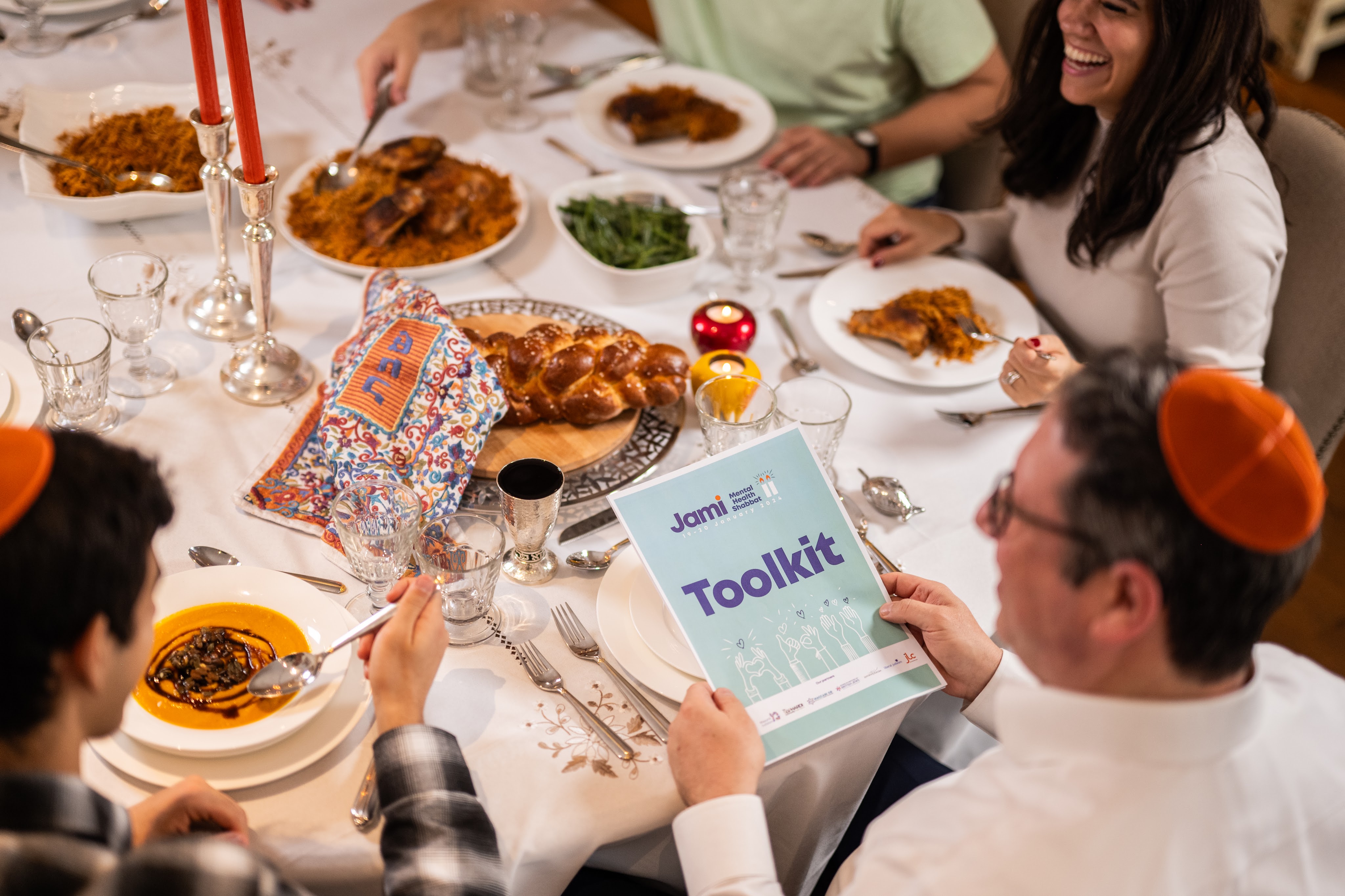
All photos by the amazingly talented Blake Ezra
ONLINE FUNERALS:
Last week, I watched online as an old friend buried her son, and another friend buried her son-in-law. The now 25-year-old widow eulogized her husband so eloquently that it was painful. She did that thing we call ‘keeping it together’ while the most exquisite words poured forth. I remember not too long after COVID, visiting the family. My college roommate described to me her daughter and son-in-law’s COVID wedding, and how much of a challenge and, at the same time, how much fun it had been. The other man, because I suppose at 26 you are considered a man, was someone who I have also known all his life. Our families have intersected at multiple generational points, including being my parents’ next-door neighbors for many years in Jerusalem. When we would come for Shabbat, it was wonderful for me to see the children of an old friend who is married to one of my brother’s old friends, play together with my children, repeating friendships through the generations.
This is the reality of Israel; we all know each other. If we didn’t know someone who was murdered, kidnapped, or displaced on the 7th of October, by now, we all know someone whose life has been forever altered by this war. There is no escaping it. From the day it started until the 100th day, every day has been punctuated by people we know losing the most precious thing in the world to them. It is a fate that can’t seem to be escaped. It is the real fear of every single Jew, and the closer you are to the epicenter of the conflict, the more palpable the fear, the more painful the fallout. Like the 25-year-old widow, most of us are doing a decent job of ‘keeping it together,’ but in truth, we are a people walking around barefooted with an invisible tear in our clothing, mourning all that has been lost over the last three months.
Yet I need to find the good. Not the silver lining that peaks through, but the balance; because that is the way the world must work if we believe that we are not just guided by fate but rather by destiny as well. In the last three months, we have grown up. We have become the adults we thought we were but, in truth, weren’t. We have found a depth of love for our fellow Jew that, though commanded by the Torah, wasn’t being practiced. We have found beauty in our differences and strength in our otherness. A bond that wasn’t there and hasn’t been there for generations. Perhaps the last time the Jewish nation felt this bonded was in the Spring of 1967, perhaps it was in 1948? Yet, this to me is new, not having been alive for either of those events. This feels palpable, and this feels real. The same way I would walk into battle to defend one of my children, today I would willingly do so for a fellow Jew. Any Jew. Even though I would be useless in any battle that didn’t include a whisk, I would still stand by the side of a Jew, no matter how different or how distant they are to me, because we share that otherness, we share a fate, a fate that recently has been beating us up black and blue, and at the same time, we share a destiny, a destiny that will, with God’s help and our own endeavor, see an Israel that is already stronger than it was three months ago, and will continue to grow in strength and commitment.
One of the saddest things I experienced this week was scrolling through the Times of Israel’s memorial page, to those who have lost their lives on October 7th and since. It is unbearably sad but important at the same time that we put more faces and names to the pain. https://www.timesofisrael.com/spotlight-topic/those-we-have-lost/
For now, I will leave you with this: may those who have lost be comforted among all the mourners of Zion and Jerusalem, those who know their pain and their suffering. May they find comfort and a way to move forward through this pain. My heart goes out to them.

MENTAL HEALTH:
I want to share with you an unexpected aspect of being a Rebbetzin, the Rabbi’s wife. Rather, it is expected when you think about it, but how often does the average person think about what their life would be like if their spouse was a communal Rabbi? Because ‘Rabbi-ing’ is something Daniel came to late in life, he was forty when he took on his first communal role. Before this, we had a whole life playing our part as community members, but not leading it, and definitely not in the spiritual sense.
I hosted meals often, but because I wanted to and because it’s a lovely part of our traditional Jewish life. Daniel occasionally led the congregation in prayer, again because it was a wonderful thing to do, but not as he does today, on a weekly, often daily basis, and more often than not, three times a day. Suffice it to say, though everything we do today was part of our life before. It wasn’t the entirety of our lives, and we weren’t contractually obligated to do it, and, as a result, our lives have changed.
The biggest change, the most surprising, is the window into people’s lives. Before he became a Rabbi of a community, I knew one friend going through a divorce, one person in my friends’ circle who lost a parent, one with a child in the hospital, and another who may have shared that she had been prescribed antidepressants because she was constantly feeling ‘down’. As the Rabbi and Rebbetzin, we have become more and at the same time less sensitive to people’s lives. It’s no longer one or two people we are aware of who are ‘living life’; rather, it’s a community’s worth. There are multiple people who are hurting and who are in some kind of pain. Don’t get me wrong, the simcha is also multiplied, but not in the same way. While Daniel may be the only Rabbi invited to a wedding, he is rarely the only Rabbi at a funeral. While people will invite hundreds to their child’s bar or bat mitzvah, only a handful will be aware that someone is unwell, and among that handful is usually the Rabbi. In our previous community, Daniel conducted upwards of 350 funerals over the seven years we served; in our present community, the number is lower but not gone.
Last week, a lovely older lady passed away; she was the matriarch of her family. The pain and loss the family felt were acute. “Why,” Daniel asked, “do we mourn? Why are we surprised when a frail person of 92 passes away?” The reason being that there is a part of us that thinks we will never die, that they will never die, that they will always be part of our lives; this part of us is subconscious, while the conscious part of us will go through the motions of burying our loved one, the subconscious struggles to align the reality with their feelings. Shiva is an opportunity to bring the physical and emotional in line, giving mourners a chance to speak and share and say goodbye in a communal setting.
We have been exposed to a tremendous amount of death. The very first grieving family we had to attend to, happened the week before we actually moved into our rabbinic position; we were still in Israel. I remember clearly Daniel and I were sitting down to lunch with our extended family on a sunny day out in the garden; Daniel’s cell phone rang, as it does often. A family had just lost a son to suicide. They were devastated, and they were reaching out to their future rabbi, as the older rabbi at that moment was unavailable. How Daniel found even a few words of comfort for them, I do not know, but he did, and though I can’t for even a moment imagine the pain these parents were experiencing, I did hear a moment of relief that Daniel provided them.
Though we were prepared to encounter physical illness and death, The illness we didn’t know we would encounter in terms of volume and diversity was mental illness. We were blessed that the then-CEO of Jami, Laurie Rackind, and his wife, psychiatrist Julia Renton, were part of our community. We started understanding the breadth of an illness that is just starting to be understood: mental illness. The stigmas attached to it and how slowly we are breaking through and creating the parity of esteem that Jami has been pushing for, for the last 20 years.
We started at Cockfosters and N Southgate Synagogue in May of 2014. By January 2015, we were aware of how many of our members were struggling with mental health challenges, from small to big, from minor to life-altering. The next January, while reading about the plague of darkness, Daniel realized that perhaps that is what people struggling with their mental health were feeling, that the darkness wasn’t just complete; it was also, as the commentators describe, something tangible, enveloping, all consuming where not a single light could shine through. Daniel suggested to Laurie, and Laurie took it and made it happen. The following year, the Shabbat to mark mental health would be Parshat Bo when we read of the plague of darkness. The first year we had about 14 communities that signed up; today, there are over 120 communities, schools, and Jewish places of work that have signed up to participate in marking the mental health Shabbat.
There is an old saying among Jews [it’s in the talmud Megilla 13b] that before God creates the illness, he creates the medicine (the cure). I don’t know that we have yet found or will ever find all the medicines needed to cure mental illness; it is an illness that we, the lay people, are just starting to understand, but professionals have pointed out that a number of things can help break a cycle. Some of them are inherently Jewish. To break the cycle, it is recommended to let go of things that feed that cycle; in today’s age, it may be toxic social media that takes us down a negative path from which it is hard to come back. Shabbat can offer that digital detox. Spending time with friends and loved ones. Though we eat meals all the time, the ceremony and ritual of Friday night dinner and Shabbat lunch create an easy to follow format and ritual, absent for non-Shabbat meals.
And though food and family can be triggering for some, for others, it is exactly what they need to be reminded of their importance and value within their family and friendship circle. To eat together, to laugh together, to cry together. Being alone isn’t something Judaism does; though there have been ascetics in Judaism, their number is few and far between. Judaism is a religion practiced in family and in community.
What the rabbis call our small temple is our home; for some, it is the synagogue. As long as these are safe spaces, embrace them, find strength and comfort and healing in these places. As the rabbi and his wife we have heard it all, and because we have, we are more in tune with our own mental health. Come home if home will help, and if it won’t, that is okay too, but make a new home, and use the lessons that Judaism teaches, of community, of sharing a burden, of breaking bread together, of gratitude both before and after every action, but most especially before and after food. Acknowledge a higher power and offer up entreaties for better days to come, days when the light will penetrate the dark, when the dark will dissipate into something that no longer takes hold of us, and the light is a path we walk hand in hand with others.
NOW ONCE MORE BACK TO FOOD:
For this year’s Mental Health Shabbat, I partnered up with Jami to create a Friday night menu that I thought reflected Shabbat warmth and hominess in one. The menu is something I thought about for ages; I have always used food as an expression of love, but could I use food as an expression of care and compassion as well? The menu brings together some of my favorite comfort foods such as chicken and pasta, some bright greens, and a super comforting loaf cake.
The challah: Pumpkin Challah. This is my basic challah recipe with the addition of pumpkin puree and spices; it just adds a bit of warmth to the challah as the weather outside is at its darkest and coldest without the welcome addition of seasonal twinkle lights. Every year, I wonder why they take down the twinkle lights just when I think the world needs them most.


Silky smooth carrot soup, served with Ras el Hanut pumpkin seeds and silan (date honey). I love carrots; they are cheap and cheerful in all their orangey brightness. Make this soup because it is silky and smooth and makes you feel sophisticated and comforted all at the same time. For the smoothest texture, use a blender and pass it through a sieve, but don’t feel pressured to do so; the soup will be delicious regardless of how silly it is. The Ras el Hanut pumpkin seeds are a great soup or salad topper, and you will find once you start eating them, you won’t be able to stop. But like the silky smoothness, the pumpkin seeds are optional, and if you still want to use pumpkin seeds but you don’t want to mess with them, add them as a soup topper raw. The last addition to the soup is Silan – Israeli date syrup. This dark brown honey is a welcome treat that cuts through the sweetness of the carrots and adds an extra layer of flavor, but though a welcome addition, is also optional.


The chicken: this is a delight. It is a chicken that is first browned on the outside; fine egg noodles are then cooked in the remaining chicken fat, toasting the noodles. The chicken is added back into the pot, and the whole thing is cooked together in a rich tomato sauce. This is a very old-fashioned Sephardi way of cooking; there is something incredibly comforting about chicken nestled in pasta. I looked at old recipes and developed this one. The first time I made it, my son had demolished the pasta and left behind almost all the chicken, so I doubled the pasta, and now we end up with a more balanced pot.
Simple green beans, green beans are always my go-to weekday and Shabbat side dish; I’m constantly experimenting with different ways to serve them. This is by far the simplest; they add a bright green pop to your table, and we all know that green is good for both our physical and emotional health.


LOAF CAKES:
Last is the cake. Loaf cakes, I love them; it really is about the shape to me. Round cakes always make me a bit edgy; I make them, but the moment I cut into them, I’m always distracted. I can’t help but think of a round cake with a wedge missing looking like Pac-Man. Let’s set aside my unconscious fear of Pac-Man and discuss this sticky toffee pudding cake. I love sticky toffee pudding, but it is a bit of a demanding dessert; there is one element too many, and it needs to be served warm. In this cake, I took all the delicious flavors of sticky toffee pudding and put them into a loaf cake, and then topped it with melted cookie spread. It tastes just like sticky toffee pudding, save the stickiness and is far less demanding once it is made.
Jami is urging us to invite friends and family over to mark mental health Shabbat. Make the recipes above or make your favorite, or buy the food ready-made; the point is to surround ourselves with love and support and know that Judaism isn’t a religion of solitude; it is a religion of community.
New Recipes in honour of Jami’s Mental Health Awareness Shabbat:


