
& More Menu Planning
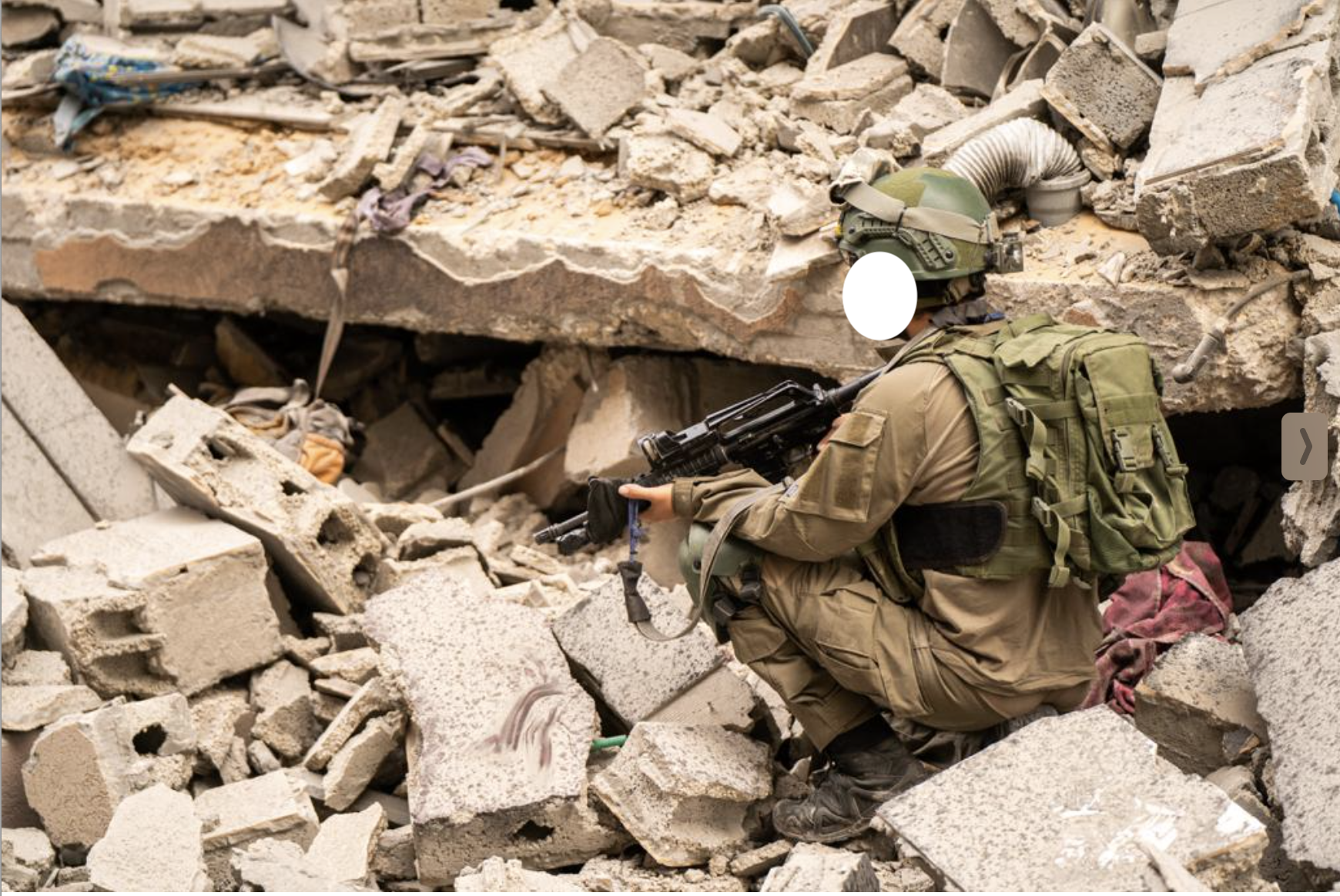
This morning, I saw a picture of my second son. I have seen pictures of him in his uniform before, seen pictures of him standing beside the President of Israel receiving honors, seen him in training, and seen him with his unit. But until today, none of that was reality. Today, I saw a picture of him in war-torn Gaza.
I don’t think I have ever written about what it’s like to be the mother of a soldier, most probably because I have never actually wanted to connect to that part of myself. But today, there is no way of avoiding it. We are back in Israel for the first time since October 7th and face the reality I must: that one of my precious sons is at war while I write from the comfort and safety of my parents’ home in Jerusalem, and my son is not too many miles away in war-torn Gaza.
I’m a visual person; I see the world and situations as images. I draw pictures in my mind of what things look like. Both of our eldest sons have served in the IDF; our eldest’s unit has not been called up, yet, and for that, I am so grateful, as are his wife and child. But the reality is that while he hasn’t been called up, every single person in his workplace has been called, and just he, along with his boss, are currently holding down the jobs of 13 other people, trying to ensure that when the war is over, they all have a business and livelihood to come back to.
I can’t even imagine the insurmountable pressure of knowing that you hold so many other people’s livelihoods in your hands and that you need to do the best for them and their families while they are out fighting a war. This is our eldest, the uber-responsible one, the one who wants everyone to be at their best all the time, who demands of himself excellence so he can provide for others. It is no way surprising to us that this is the role he has been chosen to take in this war; his long-sightedness, his ability to hold back while others go headfirst into things, has always impressed us, and now more than ever.
Like everyone else in Israel and outside it, he wants to do something; he too wants to fight this war, he too wants to be out there fighting for our survival, and yet he is home fighting for a different kind of survival, and we could not be prouder.
Until this morning, I wanted to picture our second son at a desk somewhere working on logistics to get the impossible done with few to no resources. If you know him, you would know that is his strong suit—the ability to get anything done, and the more challenging the ask, the more excited he is, the fewer resources, the better. In his small team of 21, he is the go-getter driving around the country to find whatever it is they need. In life, he is the same. He is our child that insisted that he needed a car over and over and wouldn’t let it rest, even though we put every barrier in place known to man. And still, despite earning all the money needed to both buy the car and pay for the insurance, he still waited for our permission.
Prior to the war, he was about to start university at the age of 24 because he was first in yeshiva and then the army. His plan, which we are 100% certain he would have accomplished, was to work full time while attending classes and getting his degree. The war has pressed pause on his plans, but knowing him, it won’t be for long.
What set me off this morning is the image of our children, our husbands, our siblings at war. The enemy wasn’t anywhere in the pictures, though at the same time, it was all around them. The pictures were all taken in Gaza; the soldiers in formation, pointing guns at the unseen enemy, were standing, crouching, and walking through rubble, destroyed buildings, skeletons of apartments, streets that are impassable aside from by foot.
I keep telling myself that if there was a photographer there taking pictures, it’s because it was safe to do so. But I’m just kidding myself; their stance tells us everything we need to know. They are not relaxed; they are tense and concerned; they are all on alert.
I still remember dropping off each of our children on their first day at Gan (kindergarten), thinking that it was a bit of a relief, that now I can get some work done. Yet, when I said goodbye to each of them, I immediately wanted to turn back and scoop them up and bring them back home to me so I could keep them safe in my arms just a bit longer.
Seeing the pictures today of my highly trained soldier in the midst of Gaza, on high alert, all I wanted to do was offer myself as his replacement. I know the folly of it all; my rational brain knows that I have never held a gun, fought anyone over anything, and that I’m a grandmother. But what does that rational thinking have anything to do with your child at war? And then my beautiful boy reminds me that he is where he wants to be, doing what he needs to do to protect our People in the way he has been trained to do.
The same as our eldest goes into work each day to hold down the fort, and our daughter educates other young women in what it means to be a Jew, and our youngest has upped his own practice of mitzvot in order to bring more blessings to his siblings.
For all of us who have someone we love doing something challenging at this very moment, like you, I have to let it go, let my faith take over my fear, let my belief that God has a plan to temper my overriding anxiety, believe that the rear side of the tapestry we call life is, in fact, beautiful, and that when we occasionally are gifted a glimpse of it, we can just for a moment hold God in our hands and take one step forward.
Today I saw a picture of my son in Gaza, fighting a war, and today I choose to believe at this moment, like in every moment preceding it and following it, that everything will be good and that this is just a small part of the Divine plan. Pray with me that all of our families and friends will come home safely and soon. Amen.
BACK IN ISRAEL:

We arrived in Israel on Monday night. Tuesday morning saw us walking through Jerusalem to our favorite cafe – Kadosh. Kadosh has, for as long as we have known about it, sold the best pastries in Jerusalem. Getting a seat, both inside and outside the cafe, involves waiting in line and praying. My best advice is if they offer a seat outdoors on the sidewalk, take it; it is by far the best croissant I have ever tasted. I mention them not just because of the melt-in-your-mouth pastry, but because over the last few days, they closed down the shop they have been in since 1967 and reopened a far bigger shop just down the road. What I find so hopeful about that is that in the midst of a war, Israelis and tourists are still flocking to sit down, have coffee, and eat pastries. People from all walks of life sit side by side, knowing that many of them have a soldier fighting; some of them may have experienced losses. The windows of this brand new cafe, through which you can see the bar filled with stunning pastries, also display the sign ‘Bring Them Home Now.’ Life here goes on and does it all at the same time.
We experienced the very same thing as we went to visit our children in Tel Aviv. The streets were filled with families, some just mother and child, others father and child, making their way post-Gan to a nearby park. What stood out to me wasn’t the balmy weather or the gorgeous people playing in the park, strolling on the boardwalk, or sitting down at restaurants and cafes. Rather, what struck me was a feeling of openness and love; people worried about each other; the apparent patience people had for each other in a notoriously impatient country. My prayer for Israel and the Jewish people is that when this war ends (and it will end, and I pray without the loss of any more life), we retain this love for each other, this patience, and understanding that, prior to the war, was waning and has been found again in the most challenging of circumstances. We need to prove to ourselves and others that we don’t need a war to find love.
RWANDA VS. ISRAEL:
One of the facts about Rwanda (that was shared with us, but I am yet to identify the documented source for this) that stuck in my mind, as well as in the minds of our participants, is that Rwanda is the number one country in which the population has trust in the government, one report I read said that over 95% of people in Rwanda trust the Government, to the point that one of our tour guides started a sentence by saying “Thanks to Go…” I filled out the rest of the word in my mind in the same way I would say it, “Thank God”, but she proceeded to say “Thanks to the Government”. Considering this is an autocratic government with a president who has been in power for 23 years, that is an incredible statement. On the other hand, Rwanda is number 143 in the world in terms of trusting their neighbors. These are people who prefer to be indoors with the door shut, not outside, which is unusual, to say the least. Considering it is one of the most densely populated countries in Africa (24th in the world, and first in Africa in terms of population density), we really never felt this density, as people spent most of their time away from the public eye. This really, I think, speaks in great part to their recent history of genocide in which neighbor murdered neighbor, and people who once trusted each other became killers and victims.
In Israel, the most recent poll has 43% of the population trusting the government (measure taken prior to October 7th), I couldn’t find a measure for how much Israelis trust their neighbors. It must be said that this is a country that, just prior to the war, was undergoing months of protest against judicial reforms. The population was truly split down the middle: those who trusted the government and those who didn’t. People were out in the streets arguing about the future of this country; it was loud and it was angry at times and it felt like Israel was splitting itself down the middle. Yet all those protesting felt that they had something to say and that their voice counted. I would imagine that trust in the government, even at this moment, isn’t very high. On the other hand, trust in one another in our people, our neighbors, I can only speculate. But if the feeling on the street is anything to go by, it is very high. People from all walks of life are volunteering across the country, from picking fruits and vegetables to doing laundry. Not only has the army been mobilized, but a civilian army has been mobilized, and they are not only willing; they are eager to help each other out. The slogan of this war is ‘Be’yachad Nenatzayach’ (Together we will win). The belief here is that everyone needs to do their part in order to win this war.
The population density of Israel is 34th in the world and 3rd in the Middle East which is still high. Yet, unlike Rwanda, the streets yesterday – despite the fact that people live with the constant knowledge that at any given moment they will have to run for cover as rockets fly overhead – were filled, parks were filled, and outdoor cafes didn’t have an empty table. People live their lives. Would I like Israel to be a country that trusts its government? Sure. But would I want it to be a country where people don’t trust each other? Never. The famous song we sing at these times comes to mind: Acheinu Kol Beit Yisrael:

“Acheinu kol Bait Yisrael – Our brethren, the entire Jewish People”
“Hanetunim bitzara u’bishivya – who are delivered into confinement and captivity”
“Ha’omdim bein bayam u’vein bayabasha – whether they be on the sea or dry land”
“HaMakom yiracheim aleihem viyotzi’eim mitzara li’rvacha – May the Omnipresent have mercy on them and remove them from distress to relief”
“U’mei’afela li’ora – and from darkness to light”
“U’mishibud lig’ula – and from subjugation to redemption”
Hashta b’agala u’viz’man kariv – now, speedily, and close at hand”
AND ONCE MORE BACK TO FOOD (or rather planning):

It seems strange to go from sharing ideas about war to food, but that is the reality. Something that I’m seeing so clearly here in Israel is that, as difficult as it is, people’s lives go on. Switching from one mode to the other doesn’t come naturally to me, but seeing the way people are doing it here gives me strength that I can do it too.
Last week, we discussed shopping lists and the previous week, menu planning. Now it’s time to make a plan. I know!!! Not only is a menu a plan, but shopping seems to be a plan as well and now i’m telling you there are even more plans to be made!
Two thoughts before you abandon me completely. The first is that the more often we do this, the easier it gets and the more natural and less planned it feels. The second is that if you have ever cooked a meal prior to people knocking on the door and sitting down to be fed, you have done so by design – you planned for it. The lack of plan looks alot different. No plan is when your kids come home and say “what’s for dinner?” and the fridge is bare aside from some moldy cheese and a shriveled up pepper, and you end up ordering pizza for dinner. The pizza shows up an hour later, by which time everyone is cranky and chaos has taken over, that is the epitome of a lack of a plan.
It’s clear that you already know how to plan; now I’m asking you to be intentional about it.
Have a look at your menu, and write next to each item on the menu when it can be prepared. Soup can be made ahead of time as can meatballs and frozen desserts; so you can start planning. Leaving everything to a Friday – something I often do because it’s my only real day to cook – is OK too. Yet, that also needs a plan. What needs to be cooked first? Are there items that need to be cooled completely before serving? Are there items that are best made as close to shabbat as possible? Become seriously curious about your menu. Are there three recipes that require chopped onions? If so, perhaps batch the onion chopping together.
These few minutes you spend looking at your menu and planning will save you an incredible amount of head space and time. If you have a plan of what you are cooking on Thursday rather than Friday. and you know in what order you are cooking things on Friday, as well as how long it takes to cook them, you can take a lot of the guesswork and panic out of the whole thing.
I will do my best to chart it out for you. Below is my sample menu for Friday night:
In it, you will see that I set aside Tuesday morning, Thursday evening and Friday for cooking.
Depending on my schedule on any given week, these times move around. I batch together things that are “hands on” (chopping, actively working) and “hands off” (arrange and put in the oven, for example). That way I make the most of the time in the kitchen. So making Challah which requires long breaks, punctuated by very active moments, takes place at the same time as my slow cooked brisket and Chicken Soup. Both require the same kind of time and attention. Often, I will leave the cutting of vegetables and fruit for salads as the last job to do because, if needed, this is a job I can do on Shabbat itself, if I run out of time.
I totally get that this seems like a lot of work, but do it once and keep hold of the menu, shopping list and timetable you create. You can adjust it as you learn your own timings and pace and you can copy and paste each week to make the most of your time.
One last note: if you have never experienced cooking to an intentional plan, you will automatically feel the difference. There is an element of welcome control when you know exactly what you are doing and what you are trying to accomplish. In my experience, it feels amazing. Let me know your thoughts and I can’t wait to hear your feedback.


A couple of new recipes! Especially as I am in Israel!

