
In this weeks Blog:
- Rosh Hashanah Reflections
- No such thing as a perfect recipe
- How to burn cabbage
- Yom Kippur: A History
- Swinging Chickens
- This week’s Friday night Menu
- Erev Yom Kippur Menu
- Break – fast Menu
- The tools I used most often this past Rosh Hashanah
Rosh Hashanah Reflections
Rosh Hashanah as a Rebbetzin in a large community comes with a tremendous number of benefits and equally involves far more running around than it does actual praying. In fact, this year, for the first time, I swapped my heels for ballet flats and embraced the fact that I wouldn’t be sitting or standing in one place for more than five minutes at a time. Being in flats made me far more agile and likely to really embrace my role in Shul.
I often relate life to either cooking or food. I think back to my first week of pastry training, and as I twisted my body to the side to reach the bowl I was whisking, and started to actually whisk in a really awkward position, the chef came over and pulled the bowl directly in front of me, and told me the simple principle… if you want better results, look after the chef. When translated to the home cook, as I have read in cookbooks, “If you want more delicious food, look after the cook,” in this case, yourself.
In order to do a better job of catching up with the ladies in Shul, I needed to let go of the heels and embrace looking after myself first so I could look after others. At the same time, I let go of the perceived perfection of wearing high heels to ‘look the part’. In order to be a better home cook, it’s time to look after ourselves, bring the bowl closer, and let go of perfection.
No Such Thing as a Perfect Recipe
As I attempt to write and have all of my favorite recipes photographed, I want to share with you a truth I have known for a long time. It took until reading Bee Wilson’s The Secret of Cooking to remind me that there is no such thing as ‘the best ever,’ ‘foolproof,’ or ‘perfect’ recipe. Recipes are a set of instructions that start out as a set of tasks in my kitchen. I then attempt to write them down, and then you at home will interpret what I have written and turn them back into a set of tasks. Along this journey with you, I will at times forget to add a step, I may assume you already know it, or you may lack a piece of equipment or ingredient and either substitute an ingredient or pulse the processor one too many times. Who knows? So along the way, I would like to thank those of you who provide feedback both positively and constructively. I welcome it, but I want to help all of us, myself included, become better cooks and better hosts.
How to Burn Cabbage
Speaking of perfection, this week I burnt not one, but two pots of cabbage, and in between burning batches of cabbage, I also picked up an eye-wateringly expensive pot. Of course, I blamed the equipment and not the cook for my mistake!
The steps to burn cabbage are relatively simple: have all five fires burning on your stovetop on with pots on the go, have two things in one oven and nine cakes in the other, and just for fun, deviate from your menu and cook some cabbage. And here is the most vital step: forget that the cabbage is cooking, easily done since it wasn’t on my list in the first place, and within an hour, you will have a pot of burnt cabbage.
To make a second pot of burnt cabbage: after burning the first pot of cabbage, have a discussion with your mother about the merits of throwing out the burnt cabbage versus serving it by masking the burnt taste with copious amounts of sugar and calling it caramelized. Depending on how this discussion goes, mine ended up with the burnt cabbage in the garbage. Then run out and buy a brand new pot because it was the pot’s fault the cabbage burnt after all. Ritually dip it in the mikvah, and attempt, under the same conditions, to make the cabbage again. Once you have burnt the cabbage for a second time, avoid, if possible, the conversation with your mother, as there isn’t enough sugar in the local supermarket to cover up the burnt taste. Quietly, before anyone sees, dispose of the burnt cabbage and call the new pot a triumph of engineering. Because truly there is no use crying over burnt cabbage.
Yom Kippur: A History
Jewish tradition has it that on the tenth day of Tishri, Moses came down from Mount Sinai with the second set of tablets. And we, the Jewish nation, received the message that we had been forgiven for the sin of the golden calf. Since then, Yom Kippur, the Day of Atonement, is celebrated on the tenth of Tishri.
It’s always hard to convey to people that Yom Kippur, despite the 25-hour fast, is not a sad day, but rather a joyful one. The absence of food is meant to make us present before the Lord as we pray all day. The best way to appreciate this is that the meal before the fast is meant to be festive. The table is laid as it would be for Shabbat, though there is no kiddush. Many families will make HaMotzi (the blessing before eating bread) over two loaves in the same ceremonial fashion we would before a Shabbat or Yom Tov meal. Though the food served is often those that will aid fasting, lots of carbs and often bland, it’s still celebratory.
Some of the most traditional food served at an Ashkenazi table includes chicken soup and kreplach – a ravioli-type pasta filled with ground beef or chicken served in the soup. Kreplach symbolizes so many things, but on the eve of Yom Kippur, I choose to think of it as being encased in God’s love.
Swinging Chickens
Many will serve chicken and that is because of the Kaparot..
A custom evolved in the ninth century, according to Food Historian and Rabbi Gil Marks, that in central Asia and then spreading to eastern Ashkenazi communities, on the day before Yom Kippur, people would do a custom called Kapparot. The idea was to transfer their sins to a chicken by ‘swinging’ it over one’s head. As someone who was taken to do Kapparot with chickens as a child often, the chicken in my experience was never swung. It was held gently below its feet, cradled in the holder’s hands, and circled above my head three times. That is not to say that in the past it wasn’t swung, just not in my experience. The chicken was then taken to the butcher, ritually slaughtered, and served as part of the pre-fast meal. In other cases, the chicken was given to the poor, as it is today in communities where the practice still continues.
At the time, the Sephardi authorities strongly disagreed with this custom, with Rabbi Joseph Caro (author of the Shulchan Aruch 1488-1575) calling it a foolish custom based on pagan practice.
German Jews point-blank refused to perform the ritual, while others substituted money for the chicken and then gave the money as charity.
My Pre Yom Kippur Menu
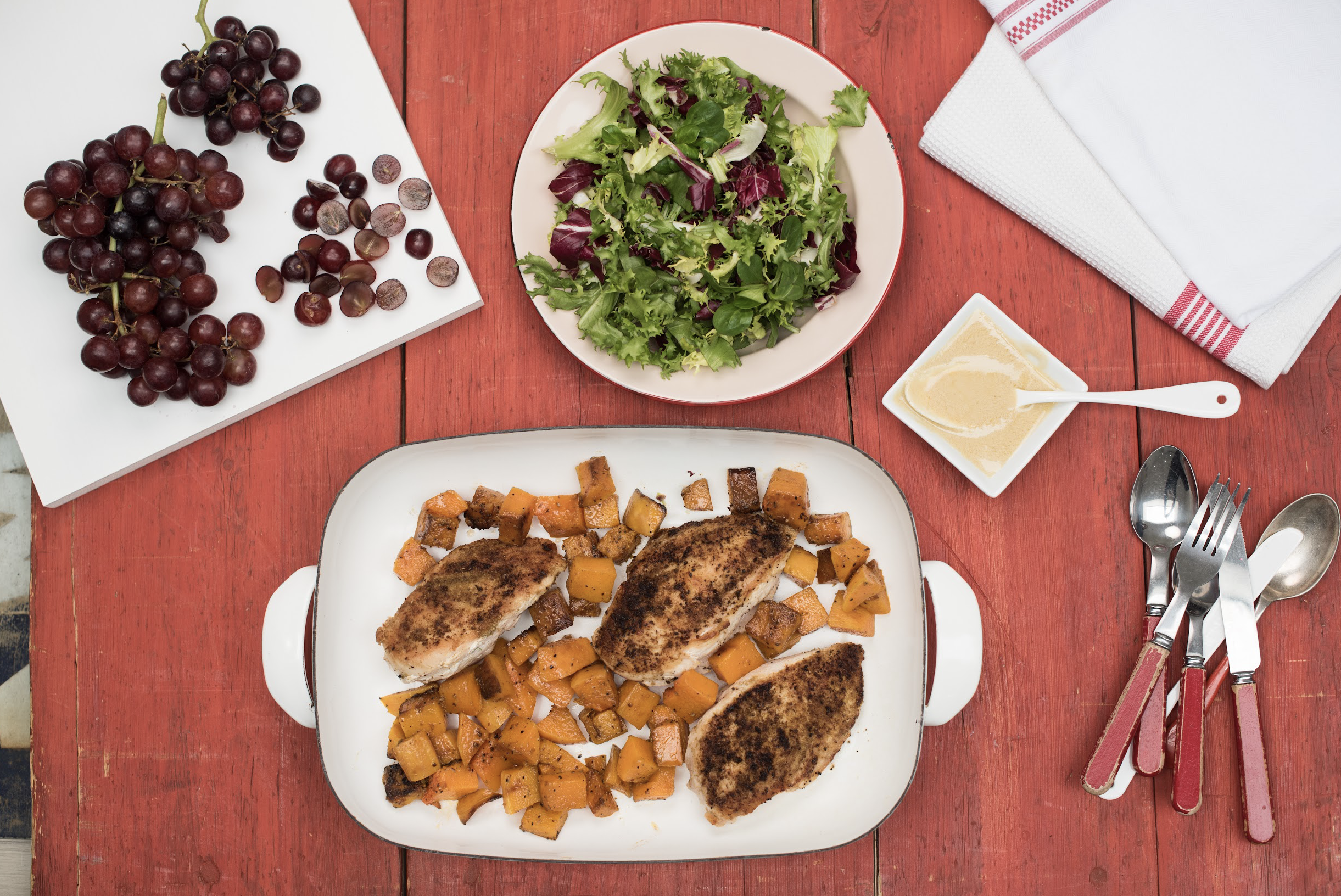
Here is my thinking around this menu, firstly being a Sunday night, seeing as I have 16 people coming to me for dinner the previous Friday night, I think I will have plenty of leftovers to serve. The additions below are things that work well before a fast, some are traditional the rest are based on the completely unreliable sources such as ‘THEY say grapes are good before a fast’, ‘THEY say fill up on carbs before a fast’ though we all know that ‘THEY’ have a lot to answer for, I still as a rule follow them – yes I am a lemming.


Break – Fast Menu
What has really fascinated me over the years is the meal after the fast, which in America and increasingly here in the UK, has become a lovely custom. The meal after the fast is a wonderful celebratory time. As someone who doesn’t fast well, I never considered the possibility of serving a lavish and what sounds like a fun meal to family and friends after the fast. Jewish delis and bakeries across America offer the option to order your Break-the-fast meal, with many delivering nationwide. I actually love this idea. To me, it’s an additional celebration around Jewish ceremonies, a way to be more engaged in Jewish traditions more often and in more places!
To break the fast after Yom Kippur – here is the plan: every item on this list will be made well ahead of time and frozen or, in the case of the gravlax, refrigerated:


- Homemade Bagels
- Tomato Soup
- Gravlax
- Zucchini (courgette) and ricotta bake (Pashtida)
- New York Crumb Cake
The two kitchen utensils I used most this past Rosh Hashana:
The OXO Good Grips Chopper – this was a total game changer! It chopped onions for me in no time, without too many tears spilled and I felt just a bit liberated by letting go of the perfection of perfectly chopped onions.


The Alessi Honey Dipper, I totally loved how elegant it looked at our Rosh Hashana/Yom Tov table.