
Spending much of my childhood in South America celebrating Rosh Hashanah in the spring didn’t feel right. The Torah is a northern hemisphere book; our holidays are anchored by the solar calendar, coinciding with different agricultural milestones, historical events, and religious observances. Rosh Hashanah in the autumn just makes sense, at least in terms of our culinary traditions, let’s delve in deep here.
I was once asked by a student if God knew everything that was, and everything that will be, how did he not know that Jews would live in the Southern hemisphere?
Although we are commanded to celebrate Passover in the spring and therefore Rosh Hashanah in the autumn, did He not know that Jews in the Southern hemisphere would actually be going contrary to the biblical stipulation? The Torah commands us, “Guard the month of spring, and make [then] the Passover offering.” Those jews celebrating Passover in Sydney or Buenos Aires are doing so in the Autumn not the Spring.
How are Jews in the southern half of the world meant to do this right? Do they need to travel north to celebrate the festivals seasonally? Or do they need to move the festivals to suit the seasons? Well, the answer is neither.
The sages set the calendar as we know it and adjusted our year to ensure that Passover always happened in the spring as they knew it. At the time the sages formalized the observance of Judaism, the map of the world looked much different from how it does today. For instance, the Equator wasn’t identified and named as such until 1736. It seems fair to say that not many Jews were living south of it at the time of the sages, and therefore, no one was experiencing wildly different seasons from their coreligionists in the north.
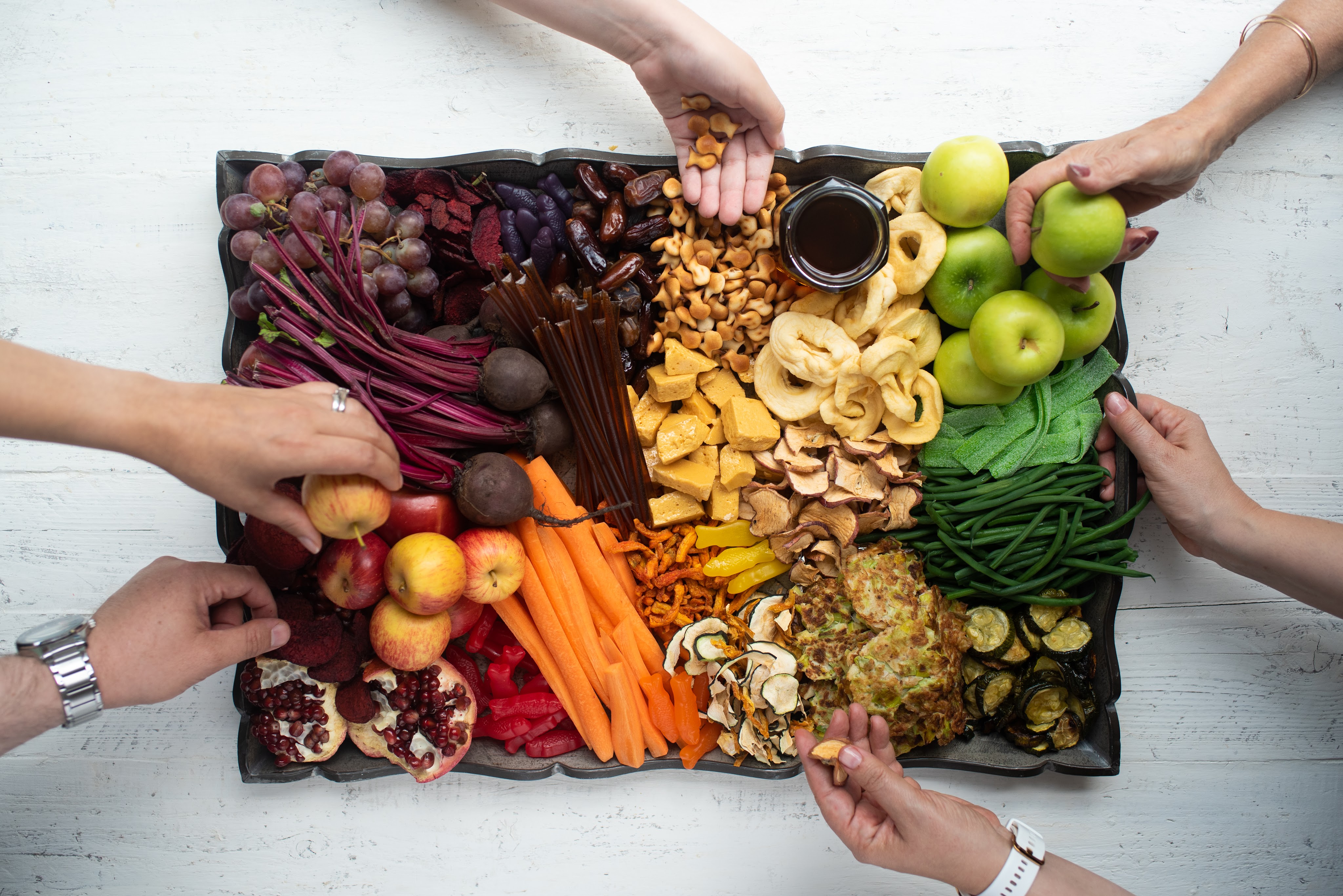
Why is this important for menu planning? One of the best ways to connect ourselves and our families to the season and the festivities is to cook traditional foods of the season. When it comes to Rosh Hashanah, there are what I think of as two sets of traditional foods.
The first is actually listed in the Talmud. The sages state a list of 5 foods that are ‘good’ to look at and then they add to ‘eat’ in the Talmud. These are: squash, black-eyed peas, leek, swiss chard, and dates. These weren’t just foods that were abundant in the land of ancient Israel in the early autumn. Each represents a play on words that introduces us to the lovely custom of the Rosh Hashanah seder.
The second set of symbolic foods, not mentioned in the talmud but probably ancient additions nonetheless, are pomegranates, fish, and honey.
But consider this: as these customs were becoming solidly entrenched in the Jewish cycle of yearly customs, the Jews were expelled from the Land of Israel after the destruction of the temple in the year 70 CE. For the Jews that settled in the Middle East and parts of North Africa and Turkey, this is all well and good. Their seasons and definitely their agriculture were similar to that of Israel. But for the Jews who found themselves in Europe, especially the further North, or those who would eventually settle in the Southern Hemisphere, these food customs didn’t make much sense.
Answering why do most Ashkenazi Jews not have a Rosh Hashanah seder as part of their custom, and secondly, why so many are now introducing it to their homes, and until recent years, were you can buy almost any produce anywhere in the world any time of year: what did those Jews who had no access to pomegranates in say Lithuania eat instead?
The Jews who settled in what would become known as Ashkenaz—the word means ‘Germany’ literally—but in time came to encompass all the Jewish communities of Northern Europe, simply did not have access to foods like dates or black-eyed peas and definitely nothing as exotic as a pomegranate. Since Rosh Hashanah foods are not mandated by the Torah, they replaced these symbols with food available to them. Carrots and apples replaced the former symbols in the far north, while in places like Provence, grapes were introduced. The Rosh Hashanah seder fell away as a custom because so few of these foods were available. Instead, the symbolic foods they did have were incorporated into the meal. Tzimis, a sweet carrot stew, honey cakes, apples, and rich meats became the traditional foods of Rosh Hashanah to compensate for what was missing.
My father is Ashkenazi, as is my mother, but my mother’s Ashkenazi father was from an old Jerusalem family that settled there in the late eighteenth and early nineteenth centuries. These Lithuanian families were incredibly learned, and when they returned to Israel and found the Rosh Hashanah symbolic foods available to them, they reintroduced the Rosh Hashanah seder to their tables. My mother’s mother was Sephardi; the family traces its roots back to Spain and Portugal. They had always upheld the custom of the Rosh Hashanah seder, so when my grandparents married, they both came from the tradition of the Rosh Hashanah seder. When my parents married, my mother introduced it to our home. The first time I was aware that others didn’t do the seder wasn’t until college, when I went to my friend Naomi’s parents for Rosh Hashanah. After eating challah and dipping their apples in honey, they went straight on to the meal. I was a bit bereft and promised myself that no matter where I would be for Rosh Hashanah from that moment on, I would carry the custom with me and introduce it to others. I can’t imagine stepping into a new year without the bounty of blessings these foods represent.
Others must have felt just like me. Thirty years ago, you couldn’t get a hold of black-eyed peas in London come hell or high water. During my childhood, my grandmother in NY would have to pre-order a pomegranate to ensure we had one for Rosh Hashanah. I still remember when my Savta came to visit me in our home in Israel, and I was smacking the outside of a pomegranate with a wooden spoon to loosen the seeds. She winced each time I smacked the pomegranate, as if I was actually smacking a person. She became so upset that I had to stop. Yet today, ahead of Rosh Hashanah every kosher shop will stock up on all the symbolic foods, some making platters for the Rosh Hashanah seder. Our intense globalization means you can find dates, pomegranates, and black-eyed peas, not just out of season but also out of place.
With that, let me introduce you to the different symbols, their significance, and how I prepare each one:
The Talmudic Ones:
Dates: (tamar – sounds like the Hebrew word for “end”) that our enemies’ hatred towards us comes to an end. We eat these as they are, but I will often make a British sticky toffee pudding for dessert on Rosh Hashanah.
Squash: Kr’a (sounds like the Hebrew word “to tear”) – that any evil verdict against us be torn. I make a butternut squash kugel topped with crispy fried onions, or zucchini fritters.
Black-Eyed Peas: (Rubia – this Aramaic word sounds like the Hebrew word for “multiply”) that we and our merits should increase. My mother makes a simple bean stew with fried onions and a goulash meat cooked until it is falling apart. The beans are then added to the stew and cooked through. As these are peas and not actually beans, they cook much faster and don’t need overnight soaking.
Leek: (Karti sounds like the Hebrew word “cut off”) that our enemies be cut off. I make my family’s traditional fried leek patties.
Swiss Chard:(selek – sounds like the Hebrew word “depart”) that our enemies depart. Another family tradition is ejjeh, a herb omelet, my family replaces the herbs with wilted swiss chard.
The Non-Biblical but Ancient Additions:
Pomegranate: That our good deeds multiply like the seeds of a pomegranate.
Apple Dipped in Honey: That we have a sweet new year. There are so many recipes that celebrate apples and honey during the season, social media posts will inundate us with images and mouth watering recipes, and yet to mee nothing is more ubiquitous to Rosh Hashanah than a super simple honey cake.
Fish: That our children multiply like the fish in the sea. We traditionally serve gefilte fish for the fish component of the Rosh Hashanah seder.
Fish Head or Sheep’s Head: That we are like the head and not the tail of the animal. My mom is the pro at cooking the fish head, usually a carp head.
The Ashkenazi Replacements for the Talmudic Foods:
Carrots: Came to replace the black-eyed peas. The Yiddish word for carrot is “mehr,” which came to represent the multiples we are praying for. My carrots are cooked simply, once cooked through in a saute pan I dress them with fresh squeezed orange juice and honey, boiled down for a few minutes to concentrate into a thin glaze. I cut them to look like coins. As every food is symbolic, the carrot’s shape to look like coins is meant to signify affluence and prosperity for the year to come.
Beetroot: For the Swiss chard. See my different beetroot salads. But for total simplicity, wrap each washed but unpeeled beetroot in aluminum foil and roast until tender, peel and slice and dress with olive oil, balsamic vinegar and salt.
2 responses to “Rosh Hashanah Traditional Foods – A History”
Ilana – what an excellent review and explanations of the Rosh Hashana Seder. I love the description of your first time without the seder in college. I’m looking forward to making your recipes, especially the techina honey!
Thank you so much! Sorry I only got to this now! But thank you and Chag Sameach!